Henan Yuke Optical Technology Co., Ltd. founded in 1995 and headquartered in Dengfeng City, Henan Province, China. We are a National High-Tech Enterprise, who devoted to manufacturing of glass Frosting powder, automatic Frosting production lines, anti-glare (AG) glass. On November 13, 2017, the Company was formally listed on the National Equities Exchange and Quotations System for SMEs (the "Third Board"). Our factory is about 14000 m2, over 110 staff, with capacity 500tons/month. Devoted to glass frosting/etching powder since the foundation.
Why Choose Us
High quality
Our products are manufactured or executed to a very high standard, using the finest materials and manufacturing processes.
Advanced equipment
A machine, tool or instrument designed with advanced technology and functionality to perform highly specific tasks with greater precision, efficiency and reliability.
Professional team
Our professional team collaborates and communicates effectively with each other, and is dedicated to delivering high quality results. We are capable of handling complex challenges and projects that require our specialized expertise and experience.
Quality control
We have built a professional quality control team to accurately inspect every raw material and every production process.
Customized services
We understand that each customer has unique manufacturing needs. That's why we offer customization options to cater to your specific requirements.
24H online service
We try and respond to all concerns within 24 hours and our teams are always at your disposal in case of any emergencies.
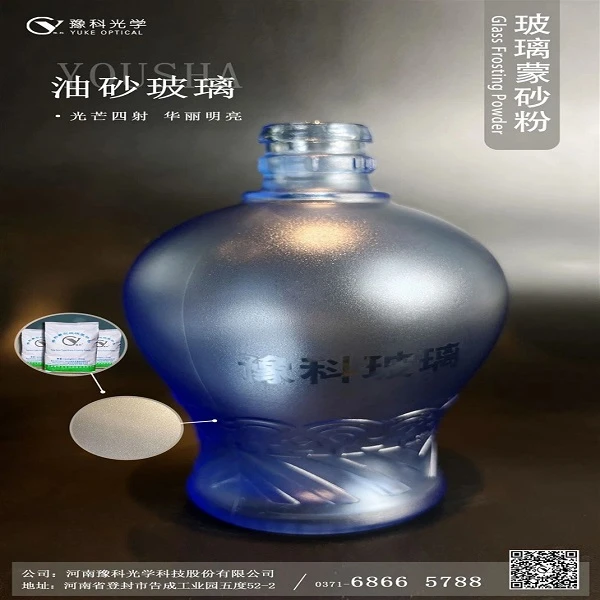
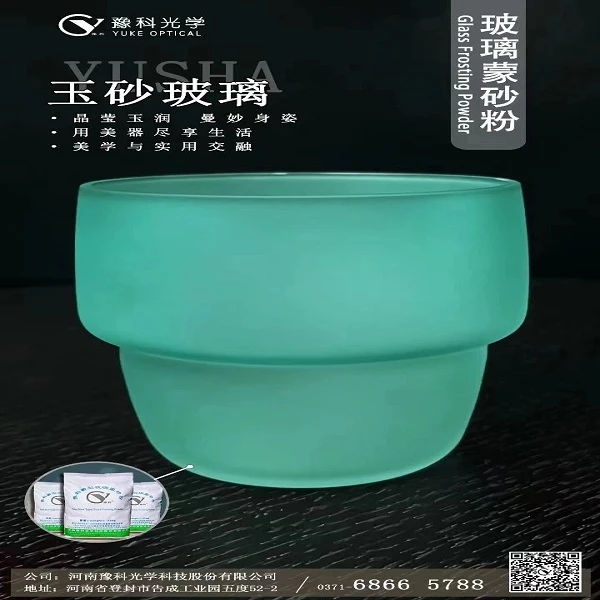
Glass Frosting Powder For Anti-Scratch Satin Glass Production
Etching chemical react with glass surface rapidly in practical production, to create a homogeneous satin effect as there is a consistent repetition of the starting attack points resulting in a uniform repEtition of the pyramids and an optimal frosted effect.
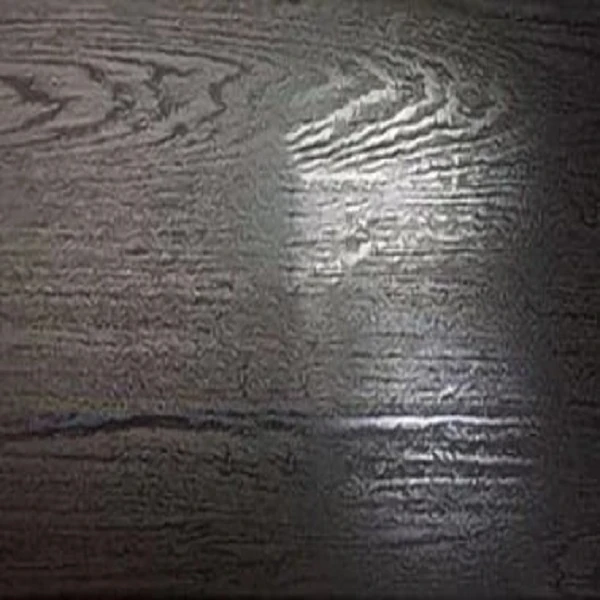
The anti-fouling glass tale is easy to clean, the surface is processed by colored glaze coating. The anti-fouling glass tale is easy to clean, the surface is processed by colored glaze coating. It has anti-scratch , anti-fouling, non-fading, anti-damp & anti-ironing advantages under 800°C calcination craft and annealing process.The combination between bright glass and dark slate, elegant and luxurious.It is widely used in home and working place.
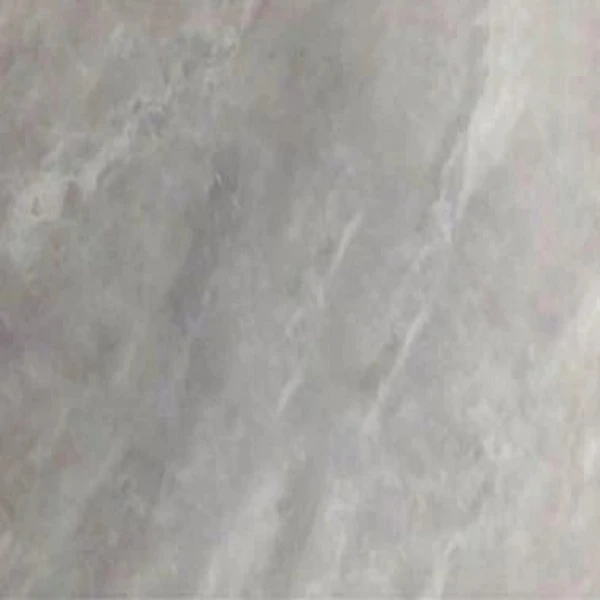
The anti-fouling glass tale is easy to clean, the surface is processed by colored glaze coating.The anti-fouling glass tale is easy to clean, the surface is processed by colored glaze coating. It has anti-scratch , anti-fouling, non-fading, anti-damp & anti-ironing advantages under 800°C calcination craft and annealing process.The combination between bright glass and dark slate, elegant and luxurious.It is widely used in home and working place.
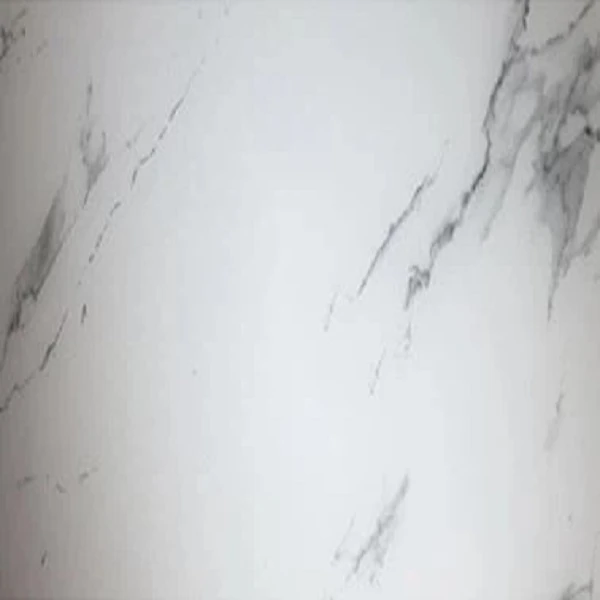
The glass table has Anti-stain, anti-scratch ablity; High hardness tempered glass can withstand 200°C temperature, anti-ironing, High density, like a diamond, with anti-fouling ability.
Anti scratch glass is less prone to scratches than conventional glass and therefore maintains its original elegance much longer. By means of a patented technology, the glass is improved with a diamond-like surface coating on one side that provides permanent protection and cannot be removed. It is times more resistant to scratches than regular glass or stainless steel and is resistant to all materials with a hardness lower than that of anti scratch glass, such as keys, bracelets, vases, etc. In all applications where appearance and design play a role, using anti scratch glass considerably reduces the frequency of glass replacement.
Advantages of Anti Scratch Glass
Scratch resistance
As the product type would suggest, one of the biggest benefits of anti scratch glass is its ability to remain unscratched, even after daily wear and tear. This is particularly useful for something like a glass countertop that is exposed to frequent daily use.
Easier to clean
In addition to requiring less frequent cleanings, products with an anti scratch glass also mean easier cleaning. There's no need to use harsh or toxic chemical cleaners.
Less mold and bacteria
Because the material is hydrophobic, you don't have to worry as much about bacteria and mold developing on the glass surface. This is great for anyone, but the likes of bacteria and mold are particularly problematic for any commercial space.
Stain resistance
Countertops are frequently exposed to food and drink, both of which can easily stain. Having a surface that's stain resistant helps extend the usable life of the product and increase its overall return on investment and value.
Impact resistance
Creating a more durable overall product, anti scratch glass helps a countertop be more resistant to impacts. This includes dropping glasses or heavy bottles on the surface.
Resistant to hard water etching
Anti scratch glass helps minimize this aesthetic issue, stopping a beautiful clear glass countertop from clouding over time.
Anti scratch glass does not require special agents for cleaning and care, but can easily be cleaned with a wide variety of conventional cleaning agents. Anti scratch glass has passed a compatibility test carried out with a range of silicone sealing materials. Scratch resistance presents many advantages for glass products. It's little surprise, therefore, that this glass meets both growing preferences and requirements from architects and interior designers. By adding the anti-scratch surface, countertops appear approximately 20 percent more brilliant. This additional shine in the glass surface makes for a more attractive product that looks new for a longer amount of time. Commercial spaces definitely get more traffic and use than a private residence. This makes anti scratch glass of particular interest to businesses and companies. However, it's equally relevant and usable in any architectural glass project within a private home. Self-adhesive and anti scratch glass ensure cost savings and preservation of sensitive glass surfaces. Vitrines, windows, bus stops, and shop counter glasses are exposed to the daily arbitrariness of vandalistic damages. Removing these damages is time-consuming and cost-intensive, as the scratched glass pane has to be replaced. Anti scratch glass have been specially designed for these kinds of damages to provide an scratch-resistant surface coating. Anti scratch glass come with an acrylate glue with low-adhesion that can be activated with water and, thus, allow easy removal after any damage.
The Scratch Resistance of Anti Scratch Glass Varies Depending on the Composition
Anti scratch glass can vary in its scratch resistance depending on its composition and any additional treatments it has undergone. Generally, common types of glass, such as tempered or anti scratch glass, are more scratch resistant than untreated glass. However, even anti scratch glass can still be scratched by harder materials. It's important to consider the specific type of glass and its intended use when assessing its scratch resistance.It all depends on what you scratch it with and the kind of glass - use a diamond or tungsten carbide and you will make a scratch good enough to break the glass along. There are anti scratch glass that are much harder than window or container glass but I am relatively confident that you will not come in much contact with these glasses. There are many coatings that can be applied to glass that will increase their scratch resistance, in fact, most manufactured bottles/containers, have a coating that will help to protect them from scratches. These coatings are applied prior to the annealing cycle in the form of tin oxide coatings (and others). Any material that is harder than glass will scratch it, however, there are many coatings that are applied to glass in its various forms that will impart characteristics that will help to reduce glasses susceptibility to scratching.
The development of chemically strengthened glasses became necessary to combined scratch and impact resistance into a thin glass part capable of protecting the smartphones during their intense use. These glasses demonstrate surface strength, ability to contain flaws and scratch resistance. In addition of the consumer electronics that brought them to common knowledge, these products are also used in industrial, automotive, aviation, architectural and pharmaceutical applications.he smartphones require a thin glass screen capable of being swiped multiple times and survive being stored with other damaging items such as keys. The anti scratch glass manufacturers are investing in research that can lead to stronger and more scratch resistant materials to be used by smartphone manufacturers. The quality of a good chemically strengthened glass therefore resides in its ability to resist scratching by particles or items that will come in contact with its surface. The challenge of using a generally brittle material such as glass is that one must increase its elasticity and reduce its brittleness at the same time to achieve the functionality required for its applications. Although scratch testing is an obvious choice to test the scratch resistance of these products, this test can bring researchers much more information than just the scratch resistance. Therefore, anti scratch glass testing presents clear advantages for researchers and quality control engineers to improve and control these glass products. As the tip is moved along the surface, the normal load applied to the tip is increased linearly, creating an increase in the severity of the contact. Following the scratch, images are taken of the entire scratch to analyze the different deformation and failures.The normal loads at which failures happen are called critical loads. Critical loads are found using either imaging or a combination of imaging and signals (Acoustic emission for example). Multiple signals can be recorded during the scratch test, allowing the user to correlate behaviors and specific measures.
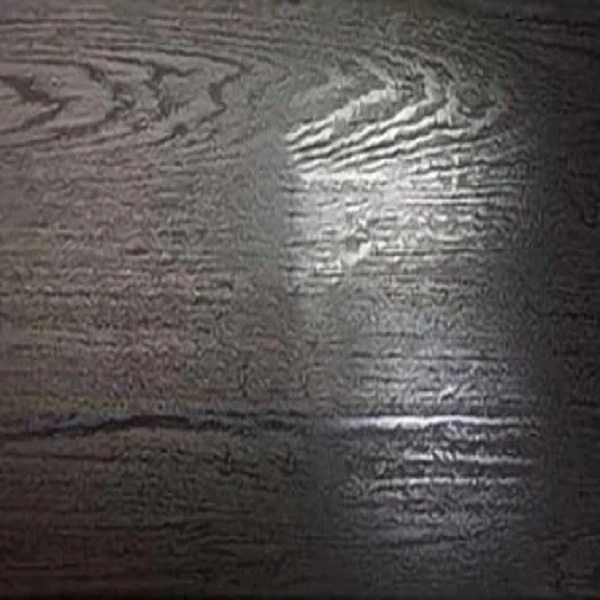
The development of chemically strengthened glasses became necessary to combined scratch and impact resistance into a thin glass part capable of protecting the smartphones during their intense use. These glasses demonstrate surface strength, ability to contain flaws and scratch resistance. In addition of the consumer electronics that brought them to common knowledge, these products are also used in industrial, automotive, aviation, architectural and pharmaceutical applications.he smartphones require a thin glass screen capable of being swiped multiple times and survive being stored with other damaging items such as keys. The anti scratch glass manufacturers are investing in research that can lead to stronger and more scratch resistant materials to be used by smartphone manufacturers. The quality of a good chemically strengthened glass therefore resides in its ability to resist scratching by particles or items that will come in contact with its surface. The challenge of using a generally brittle material such as glass is that one must increase its elasticity and reduce its brittleness at the same time to achieve the functionality required for its applications. Although scratch testing is an obvious choice to test the scratch resistance of these products, this test can bring researchers much more information than just the scratch resistance. Therefore, anti scratch glass testing presents clear advantages for researchers and quality control engineers to improve and control these glass products. As the tip is moved along the surface, the normal load applied to the tip is increased linearly, creating an increase in the severity of the contact. Following the scratch, images are taken of the entire scratch to analyze the different deformation and failures.The normal loads at which failures happen are called critical loads. Critical loads are found using either imaging or a combination of imaging and signals (Acoustic emission for example). Multiple signals can be recorded during the scratch test, allowing the user to correlate behaviors and specific measures.
Anti scratch glass coating is a type of protective coating or film applied to an object's surface for mitigation against scratches. Scratches are small surface-level cuts left on a surface following interaction with a sharper object. Anti scratch glass coatings provide scratch resistances by containing tiny microscopic materials with scratch-resistant properties. Scratch resistance materials come in the form of additives, filters, and binders. Besides materials, scratch resistances is impacted by coating formation techniques. Scratch resistance is measured using the Scratch-hardness test. Commercially, anti-scratch coatings are used in the automotive, optical, photographic, and electronics industries, where resale and/or functionality is impaired by scratches. Anti scratch glass coatings are of growing importance as traditional scratch resistance materials like metals and glass are replaced with low-scratch resistant plastics. Anti scratch glass coatings in the automotive industry maintain a car's appearance and prevent damage of a car's anti-corrosion layer. The anti-corrosion layer protects car metals from environmental harm. Automotive anti scratch glass coatings are becoming stronger (from 10 newtons to 15 newtons of protection) to counter scratch resistance lost due to the industry shift from steel to lightweight, but low-scratch resistant plastics and aluminium. Currently, scratch-formation is decreased with a primer and clear coat. The primer is made of polyolefin-resin, while the clear coat contains the additives siloxane and erucamide. anti scratch glasscoatings are added to glasses due to scratches' extreme ability to impact a wearer's vision. Even when optical glasses are made of high scratch-resistances glass, polycarbonate, or CR-39, coatings are still used. Optical coatings include diamond-like carbon (DLC) and anti-reflective-scratch hybrid coatings. Diamond-like Carbon is a coating that shares diamonds' extreme scratch resistance. Anti-reflective Scratch hybrid coatings contain scratch-resistant additives with anti-reflective coating materials. In the electronics industry, anti scratch glass coatings are applied to electronic screens to prevent primary fingernails scratches. Screens are made of either polycarbonate (the highest Scratch-resistant plastic) or higher-end glass. Electronics Industry Anti-Scratch coatings often contain the anti-scratch additives siloxane, and the anti-Scratch filters TiO2 (titanium dioxide) and SiO2 (silicon dioxide). The additives and Filters are combined with a Fluorocarbons resin. Fluorocarbon resin is an oleophobic material. Oleophobic materials are materials that repel oils caused by fingerprints. Anti scratch glass coatings are often used on plastic products wherever optical clarity, weathering, and chemical resistance are required. Examples include optical discs, displays, injection-molded parts, gauges and other instruments, mirrors, signs, eye safety/protective goggles, and cosmetic packaging.
Effect of Anti Scratch Glass on Deformation Mechanism
Anti scratch glass coatings change the substrate's Tribological (Properties resulting from surface-environment interaction) and Mechanical (a material's physical properties) properties. Changed Tribological and Mechanical properties impact Scratch's deformation Mechanisms (microscopic effects of deforming a material), Scratch visibility, friction, and other additional considerations. Anti scratch glass coatings lessen the impacts of scratches three primary deformation mechanisms: Ironing, micro-cracking, and plowing. The dislocation of atoms into weaker Atomic planes due to Plowing's plastic deformations. Plowing is when an indenture breaks a material's surface and leaves scratch marks. Anti scratch glass coatings contain filter-based materials with high ductility (ability to withstand plastic deformations) to limit plowing. Plastic deformations occur when the atomic bonds holding atomic planes break, causing the planes to dislocate into weaker positions. Control for plowing is important as every additional plowing event leaves a scratch and greater risk for internal damage, which will decrease products lifespan. Micro-cracking is micro-sized cracks that form on brittle surfaces due to the jerking indentor movement known as stick-slip. Anti scratch glass coatings control for Micro-cracking by containing either filters, binders, or additives with high tensile strength. Recently, anti scratch glass research is focusing on nano-cracking, the nanotribical version of microcracking by creating nano-specific additives. Anti scratch glass coatings control scratch ironing by either prolonging or preventing elastic deformations. Elastic deformations are non-permanent stretching of atomic bonds occurring before plastic deformation. Anti scratch glass coatings control elastic deformations, which causes a short-term grooving effect, by decreasing elasticity and increasing ductility. Decreasing elasticity, however, must be balanced since low elasticity causes micro-cracking. Scratch resistance can also be increased by prolonging the ironing period with yield point materials. Yield point is the point a materials change from elastic to plastic deformations. Higher yield point materials decrease permeant plowing, by increasing non-permeant ironing. Scratch resistance coatings contain low friction, the sliding resistance force, surfaces.
Anti scratch glass, also known as tempered glass or toughened glass, is a type of glass that has been chemically treated or thermally processed to increase its strength and resistance to scratches. It is widely used in various industries, including electronics, automotive, construction, and aerospace, to protect displays, windows, and other surfaces from damage caused by everyday wear and tear.The global Anti scratch glass market has been witnessing steady growth in recent years. Factors driving the market growth include increasing demand for smartphones, tablets, and other electronic devices with scratch-resistant displays, growing automotive production, and rising construction activities worldwide. The rising focus on safety and durability of consumer electronics is also contributing to the demand for scratch-resistant glass. Moreover, technological advancements in glass manufacturing techniques and the development of new coating materials are further propelling market growth. For instance, the emergence of nanotechnology-based coatings has significantly enhanced the scratch resistance of glass surfaces, driving their adoption in various applications.In terms of market trends, the demand for Anti scratch glass with anti-fingerprint and anti-glare properties has been increasing. These properties improve the overall user experience by reducing smudges and reflections on glass surfaces, respectively. Additionally, manufacturers are focusing on developing thinner and lighter Anti scratch glass products to meet the evolving needs of electronics and automotive industries. The Anti scratch glass market is expected to grow at a CAGR of % during the forecast period. The market will likely continue to witness growth due to the increasing demand for electronic devices, automotive safety, and enhanced durability of glass surfaces. Technological advancements and the development of innovative coatings are expected to further drive market expansion in the coming years.
FAQ
Hot Tags: anti scratch glass, China, manufacturers, suppliers, price, buy