


3D Laser Engraving
At its core, 3D laser engraving is the precise removal of material at variable depths using a high-intensity laser beam. Rather than operating at the same power across the entire surface, the laser intensity is dynamically controlled to carve away more material wherever deeper etching is desired.To put it simply, this type of engraving removes the materials in all three directions. The laser head moves across the workpiece in horizontal and vertical directions, while the third dimension, depth, is varied through laser intensity.


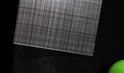
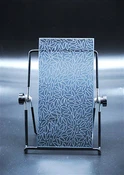
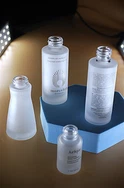
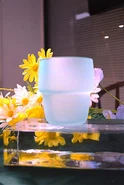
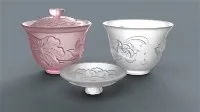
3D laser engraving, which is a subset of laser marking, is the practice of using lasers to engrave on glass, leather, crystal, wood.
Advantages of 3D Laser Engraving
Greater sense of realism
With the interplay of highlights and shadows across 3D shapes, engraved objects and artwork feel much more lifelike and organic. The extra visual information gives designs a boost in perceptual quality.
Uniting form and function
For products like jewelry or industrial molds, functional advantages arise from 3D contours that can fit or grip better ergonomically.
Eye-catching depth
A 3D engraving draws the eye into the image, creating attention-grabbing centerpieces and focal points. Depth adds interest.
Next level customization
Because designs can be formed in three dimensions, 3D laser engraving allows for detailed customization and personalized shaping.
Why Choose Us
High quality
Our products are manufactured or executed to a very high standard, using the finest materials and manufacturing processes.
Advanced equipment
A machine, tool or instrument designed with advanced technology and functionality to perform highly specific tasks with greater precision, efficiency and reliability.
Professional team
Our professional team collaborates and communicates effectively with each other, and is dedicated to delivering high quality results. We are capable of handling complex challenges and projects that require our specialized expertise and experience.
Quality control
We have built a professional quality control team to accurately inspect every raw material and every production process.
Customized services
We understand that each customer has unique manufacturing needs. That's why we offer customization options to cater to your specific requirements.
24H online service
We try and respond to all concerns within 24 hours and our teams are always at your disposal in case of any emergencies.

The 3D engraving process is also referred to as relief engraving. The term is especially common for 3D engraving wood where a deeply engraved art piece, with varied height points, is created. Now, what governs the depth? The grayscale images or height maps. Grayscale refers to shades of gray that span from black at one end to white at the other end. In grayscale digital images, each pixel carries a brightness value ranging from 0 (black) to 255 (white). In between are 254 levels of gray.These images lack any color information, and detail is conveyed purely based on brightness patterns across the pixels. They are fed as input to the laser engravers, where the brightness levels get translated into etching depths. Darker grays and blacks indicate a deeper engraving, while lighter grays create shallower etching. White areas are left untouched. During the engraving process, as the laser head scans over the material, the laser power changes based on the shade of gray underneath it. With 256 levels of gray to leverage, smooth slopes, subtle curves, and dramatic pits and peaks can be carved out by eliminating material accordingly. This gives creations a true three-dimensional profile. One may ask about grayscale height maps, where to get them? You can find them on the internet or generate them with 3D rendering software. Remember, a great height map is what makes an ordinary engraving extraordinary. So, do take time optimizing it.
The Difference Between 3D Laser Engraving and 2D Laser Engraving
The key contrast between 3D engraving and standard 2D laser engraving is the ability to adjust the power and depth. In 2D laser engraving, the laser operates at a single fixed power and depth. The entire engraving area is etched to the same depth. This creates engraved designs that are flat and do not have any contours. 3D laser engraving enables finer control over the laser power across the work area. By modulating the power, varying heights and depths can be achieved. This allows the creation of 3D structures with overhangs and curved surfaces. 2D and 3D engraving are surface laser engraving processes as the material is removed from the surface. There’s another special engraving technique called Sub Surface Laser Engraving (SSLE) that allows for the creation of intricate designs inside transparent materials, most commonly glass or crystal.In this process, a laser beam is focused on specific points within the material. At these targeted points, the laser induces localized damage or micro-fractures. As the laser progresses, these micro-fractures cumulatively form a three-dimensional image or pattern. The result is a stunning internal engraving that appears to float within the material. In sub surface laserengraving (SSLE), the internal structure is altered to form the design but the external surface remarkably remains pristine and unmarred. One of the appeals of laser engraving is the wide range of materials it can mark. Laser light can etch into and darken the surface of many materials. But which materials are best suited for detailed 3D laser engraving? Ideally, the material should absorb laser energy efficiently, resist fracturing from rapid heating, and have a fine matte surface texture. Wood, plastics, metals, (iron, stainless steel, and titanium), leather, painted glass, ceramics, and stone are outstanding candidates. Mirror-like finishes and clear acrylics are not recommended. Remember that the choice of material also impacts the safe laser settings. Harder materials like metals and stone require higher power to penetrate deeper while sensitive materials like wood need lower power to avoid scorching.
The Process of 3D Laser Engraving
Before the actual engraving begins, a grayscale image that represents the depth map of the engraving is created. This image serves as a guide for the laser, dictating how deep it should be engraved at any given point. To generate a 3D grayscale image, start with a 3D model of the design. Get specialized software like Adobe Photoshop, and import this model image into it. Convert it into grayscale and then invert it. You may further tweak brightness levels and contrast to sharpen the image. If you have an STL file for a 3D model, you may directly convert it into a PNG heightmap with this site. Once the grayscale image is ready, it is sent to the laser engraving machine. Here, the operator sets specific parameters such as the laser's power, speed, and passes. These settings are crucial as they determine the quality and precision of the engraving. The grayscale image serves as a map, guiding the laser's actions. If you're using xTool, use our recommended material-based settings to get optimized results. With everything set, the engraving begins. The laser beam moves over the material, adjusting its power based on the grayscale image. Darker areas of the image instruct the laser to use more power, resulting in deeper engraving. Conversely, lighter areas might receive minimal power or even none at all, where the region is completely white. This leads to shallower engravings or untouched surfaces.

Tips to Improve 3D Laser Engraving Results
Laser engraving is an art, and one cannot master it in a day. It takes time to learn, experiment, and retry until you find optimal parameters for the engraving. To point you in the right direction, and get you aware of critical things. The essence of 3D laser engraving lies in the grayscale height map. While creating an accurate grayscale height map can be challenging, it is this very map that dictates the laser’s actions. The depth, intricacy, and precision of the engraving are all determined by this image. Investing time and effort into perfecting this map will significantly enhance the final result. The software you use plays a crucial role in determining the quality of your engravings. Select a platform that offers versatility and compatibility with your engraving machine. If you’re using a diode laser, you may get to see the blue light and IR options. Blue light is suitable for materials like wood and leather, while IR light is ideal for metals. Along with the grayscale map, setting the right parameters is the key. If you’re using you may encounter these laser parameters, set them based on your requirements. We offer seven different bitmap modes, each for various image scenarios. For instance, Jarvis mode is recommended for infrared light, while grayscale mode is ideal for blue light. DPI is not just the pixel density; it’s actually the density of dots the engraver can deliver in a linear inch. This influences the detail and appearance of the engraved image. Ensure you set the DPI appropriately based on the image's pixel density. Power settings, ranging from 1 to 100%, impact the depth of the engraving. More minimum power means you will get more crisper and detailed designs. However, you may test out power on a scarp piece, before adjusting it. The more passes, the deeper the engraving. However, with the right settings and machine power, a single pass can often achieve the desired effect.
3D laser engraving is different in terms of the input. It's a lengthy and demanding process but once you feed your input to the machine, wonders start happening. Basically, all the designs, patterns, photos or logos, etc are created on a 3D modeling software that comes either built-in with the machine or is a third-party purchase. Once the drafting of designs on the software is done, the laser starts its work. It concentrates the focused beam of laser on a point that lies below the surface of the substrate. The engraving process starts when the bright points of the design start getting plotted on the substrate. This is followed by focusing of the beam on each 3d coordinate. As soon as the laser beam reaches the focal point, the maximum power laser pulse makes a void in the substrate. Once this coordinate is done, the beam will move on to the next coordinate and the whole process is repeated. Until the minimum number of points have been created to produce the design or pattern again within the substrate. The 3d laser machine works on its own. When the image becomes lighter, it automatically decreases the power to make adjustments and when the image becomes darker, it increases the power at its output. The 3D laser burns the substrate material to create engraving. In the case of deep engravings, the power output of the machine is to be set higher. But, if the engraving is not that deep, the power output is lowered. This is all done by the machine itself. You just have to feed the design, let the laser do its job while you sit back in peace. Also, the substrate material would need your attention as well. After you are done with the engraving, you will have to remove all the burnt material.
Compatible Substrates for 3D Laser Engraving
Surprisingly, 3D laser engraving has its own downs. You can't have every kind of substrate that can undergo 3D laser engraving. For example, the stone is that kind of substrate which is very hard to cut or engrave. Since the laser has to travel through the material, it finds it difficult in the case of stone which repels it due to its hard structure. But, don't worry, let us give you recommendations for the substrate materials that are compatible with a 3D laser engraving machine. The most suitable and compatible material for doing 3D laser engraving is hardwood. Hardwood obtained from cherry, walnut, maple, and birch contains a very good grain structure which helps in creating a good engraving finish.The details of engraving on hardwood are second to none. One might think that the laser burns the material and this is the wood that we are talking about. Is this dangerous? Not at all. The soot can easily be cooled off with the help of water while the engraving process is underway. After the hardwood, there is acrylic that helps you create 3D designs with the help of a 3D laser engraver. Even though the hardness of acrylic is more than wood, it is easier to melt. This ease of melting the material enables you to produce good quality designs and patterns on your object. In the case of clear acrylic, you might want to polish the surface of the engraving. For all those who are always interested in creating customized products, the medium-density fibreboard is the material to go for. It can easily be painted later. Also, it's readily available. Since its readily available, it is quite affordable as compared to other materials. After the engraving operation is done, the surface can be cleaned by using an air hose or clothes that are damp. Painting can be done after the cleaning. Crystals or more commonly glass have also proved to be great art when it comes to engraving. There are many 3d laser glass etching machines available in the market that can do the job but CO2 laser engravers have a reputation for performing the job in a much better way. The wavelength of these lasers is absorbed into the glass. This absorption of the laser creates marks inside the crystal glass. People tend to buy 3d photo crystal laser engraving machines for their home-based business and that serves them just right. Gifts that are personalized with portraits are also made with a 3D crystal laser engraving machine.

FAQ
We're well-known as one of the leading 3D laser engraving manufacturers and suppliers in China for 25 years. Welcome to buy high quality 3D laser engraving made in China here from our factory. For price consultation, contact us.
3D Laser Engraving