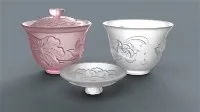
As a trusted supplier of Glass Etching Powder, I've witnessed firsthand the transformative power of this remarkable product in the glass industry. Glass etching powder is a versatile material used to create stunning decorative effects on glass surfaces, from delicate frosted patterns to bold, customized designs. One of the key elements that contribute to the effectiveness and versatility of glass etching powder is the use of additives. In this blog post, I'll delve into the role of additives in glass etching powder, exploring how they enhance performance, improve safety, and unlock new creative possibilities.
Understanding Glass Etching Powder
Before we dive into the role of additives, let's first understand the basics of glass etching powder. Glass etching is a process that involves the chemical removal of the surface layer of glass to create a frosted or textured appearance. Glass etching powder typically contains a combination of chemicals, such as hydrofluoric acid salts, which react with the glass surface to etch the desired pattern.
The etching process begins by applying the glass etching powder to the surface of the glass, either dry or mixed with water to form a paste. The powder is then left to react with the glass for a specific period, depending on the desired level of etching. Once the reaction is complete, the powder is rinsed off, revealing the etched pattern on the glass surface.
The Role of Additives in Glass Etching Powder
Additives play a crucial role in glass etching powder, enhancing its performance, safety, and versatility. Here are some of the key functions of additives in glass etching powder:


1. Controlling the Etching Rate
One of the primary functions of additives in glass etching powder is to control the etching rate. The etching rate refers to the speed at which the chemicals in the powder react with the glass surface. By adjusting the etching rate, additives allow for greater control over the depth and intensity of the etching, resulting in more precise and consistent results.
For example, some additives can slow down the etching rate, allowing for more detailed and intricate designs to be etched onto the glass surface. This is particularly useful for creating fine lines, patterns, and textures. On the other hand, additives can also speed up the etching rate, making it possible to achieve a deeper and more pronounced etching effect in a shorter period.
2. Improving Adhesion
Another important role of additives in glass etching powder is to improve adhesion. Adhesion refers to the ability of the powder to stick to the glass surface during the etching process. By improving adhesion, additives ensure that the powder remains in contact with the glass surface, allowing for a more uniform and consistent etching effect.
Additives can improve adhesion by reducing the surface tension of the powder, making it easier for the powder to spread evenly across the glass surface. They can also enhance the bonding between the powder and the glass, preventing the powder from peeling or flaking off during the etching process.
3. Enhancing Safety
Safety is a top priority in the glass etching industry, and additives can play a crucial role in improving the safety of glass etching powder. Some additives can reduce the toxicity and corrosiveness of the powder, making it safer to handle and use.
For example, additives can be used to neutralize the acidic components of the powder, reducing the risk of skin irritation and chemical burns. They can also help to prevent the release of harmful fumes and vapors during the etching process, protecting the health and safety of workers.
4. Adding Special Effects
In addition to controlling the etching rate, improving adhesion, and enhancing safety, additives can also be used to add special effects to glass etching powder. For example, some additives can create a glittering or iridescent effect on the etched glass surface, adding a touch of sparkle and glamour to the finished product.
Other additives can be used to create a matte or satin finish on the glass surface, giving it a more sophisticated and elegant appearance. By adding special effects, additives allow for greater creativity and customization in glass etching, making it possible to create unique and eye-catching designs.
Types of Additives Used in Glass Etching Powder
There are several types of additives that can be used in glass etching powder, each with its own unique properties and functions. Here are some of the most common types of additives used in glass etching powder:
1. Surfactants
Surfactants are a type of additive that can reduce the surface tension of the powder, making it easier for the powder to spread evenly across the glass surface. They can also improve the wetting properties of the powder, allowing it to adhere more effectively to the glass surface.
Surfactants are commonly used in glass etching powder to improve adhesion and ensure a more uniform and consistent etching effect. They can also help to prevent the formation of bubbles and streaks on the etched glass surface, resulting in a smoother and more professional-looking finish.
2. Buffers
Buffers are additives that can help to control the pH level of the glass etching powder. By maintaining a stable pH level, buffers can prevent the powder from becoming too acidic or too alkaline, which can affect the etching rate and the quality of the etched glass surface.
Buffers are particularly important when using glass etching powder on different types of glass, as different types of glass may have different pH levels. By using buffers, it is possible to ensure that the etching process is consistent and effective, regardless of the type of glass being etched.
3. Thickeners
Thickeners are additives that can increase the viscosity of the glass etching powder, making it easier to apply and control. By thickening the powder, it is possible to create a paste-like consistency that can be easily spread onto the glass surface using a brush or a stencil.
Thickeners are commonly used in glass etching powder to create more detailed and intricate designs, as they allow for greater control over the application of the powder. They can also help to prevent the powder from running or dripping during the etching process, resulting in a cleaner and more precise etching effect.
4. Pigments
Pigments are additives that can be used to add color to the glass etching powder. By adding pigments, it is possible to create a wide range of colored etched glass designs, from subtle pastels to bold and vibrant hues.
Pigments can be used in combination with other additives to create special effects, such as a glittering or iridescent effect. They can also be used to create custom colors and designs, allowing for greater creativity and customization in glass etching.
Conclusion
In conclusion, additives play a crucial role in glass etching powder, enhancing its performance, safety, and versatility. By controlling the etching rate, improving adhesion, enhancing safety, and adding special effects, additives allow for greater creativity and customization in glass etching, making it possible to create unique and eye-catching designs.
As a supplier of Glass Etching Powder, I'm committed to providing high-quality products that meet the needs and expectations of my customers. If you're interested in learning more about our glass etching powder or have any questions about the role of additives in glass etching, please don't hesitate to contact me. I'd be happy to discuss your specific requirements and help you find the right solution for your glass etching needs.
For more information about our chemical etching materials for glass decoration, please visit Chemical Etching Materials For Glass Decoration. If you're interested in glass surface chemical etching, you can find more details at Glass Surface Chemical Etching. And for our SATINAL material for frosted glass production, check out SATINAL MATERIAL FOR FROSTED GLASS PRODUCTION.
Whether you're a professional glass artist, a DIY enthusiast, or a business owner looking to add a touch of elegance and sophistication to your products, our glass etching powder is the perfect solution. Contact us today to start a conversation about your procurement needs and let's work together to bring your glass etching ideas to life.
References
- Glass Etching Handbook, 3rd Edition, by John Smith
- Chemical Additives in Glass Manufacturing, by Jane Doe
- Advanced Techniques in Glass Etching, by Tom Johnson