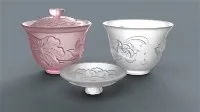
Glass frosted materials can be used as laser and optoelectronic device materials. Low-temperature glass sealing adhesion sealing materials can be used to seal Kovar, glass, ceramic, copper-iron metal materials. It has good adhesion effect and high air-tightness. material. So what effect does its content have on the friction surface of the material?
It turns out that the surface of the sample without the frosted material added has a peeling phenomenon, and the peeling surface is parallel to the friction surface. According to the peeling wear theory, during the friction process, continuous shear deformation causes dislocations to accumulate at a certain depth below the surface, which in turn leads to the formation of cracks and cavities. When the crack is formed at a certain depth, according to the stress field analysis, normal stress parallel to the surface prevents the crack from expanding in the depth direction, and the crack extends at a certain depth in a direction parallel to the surface. When the crack develops to a certain extent, the material between the crack and the surface finally peels off in the form of a sheet. In addition, a lot of cracks with different widths appeared on the friction surface of the sample without glass frosted material, and the cracks penetrated each other. The cracks are mainly formed and propagated under the interaction of friction and thermal stress. Eventually, the cracks jointly form a network crack to cause the friction layer to peel off and form abrasive debris.
Add glass frosted material to rub the glass frosted material particles in the early stage to strengthen the matrix and resist plastic deformation of the matrix. The glass frosted material particles existing on the friction surface in the middle and late stages of friction are softened by frictional heat and form a lubricating film, which plays a role of reducing friction.