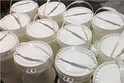
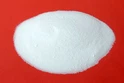
Frosting glass powder is a specialized material widely used in the glass industry to modify the appearance and properties of glass. As a supplier of frosting glass powder, I often encounter inquiries from customers regarding its impact on glass transparency. In this blog post, I will delve into the science behind frosting glass powder and explore whether it completely affects the transparency of glass.
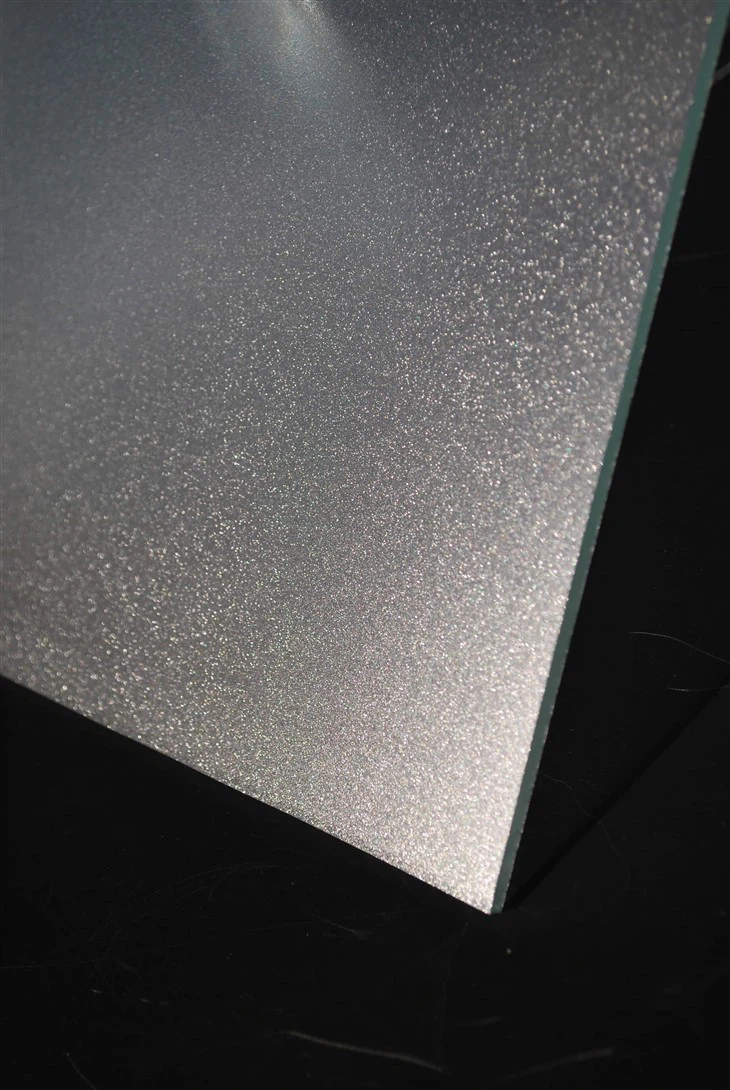

How Frosting Glass Powder Works
Frosting glass powder typically contains a combination of chemicals, such as hydrofluoric acid salts or other etching agents. When applied to the surface of glass, these chemicals react with the silica in the glass, creating a micro - rough surface. This micro - roughness scatters light as it passes through the glass, which is the fundamental mechanism that changes the glass's appearance.
The chemical reaction involved in the frosting process is a complex one. For example, when using ammonium bifluoride (a common ingredient in frosting glass powder), the following reaction can occur on the glass surface:
(4NH_4HF_2 + SiO_2=SiF_4↑+ 4NH_3↑+ 3H_2O)
The silicon tetrafluoride ((SiF_4)) gas escapes, and the reaction leaves behind a pitted and uneven surface.
Factors Affecting the Degree of Transparency Change
- Particle Size of Frosting Glass Powder
The particle size of the frosting glass powder plays a crucial role in determining the final transparency of the frosted glass. Finer particles tend to create a more uniform and less deep etching on the glass surface. This results in a more translucent appearance, where some light can still pass through in a somewhat diffused manner. Coarser particles, on the other hand, can cause deeper and more irregular etching, leading to a more opaque effect. For instance, in applications where a high - level of privacy is required, coarser frosting glass powder may be used. - Application Method
The way the frosting glass powder is applied also impacts transparency. There are several application methods, including spraying, brushing, and immersion. Spraying the frosting glass powder in a fine mist can create a more even distribution on the glass surface, resulting in a relatively consistent level of transparency. Brushing may lead to uneven application, with some areas having a thicker layer of the powder and thus more significant etching, which can cause variations in transparency across the glass. Immersion in a solution containing the frosting glass powder can provide a more uniform treatment but may require careful control of the immersion time to achieve the desired transparency. - Concentration of Frosting Solution
When the frosting glass powder is mixed with a solvent to form a frosting solution, the concentration of the powder in the solution matters. A higher concentration of the powder in the solution will generally lead to more aggressive etching of the glass surface. This can result in a greater reduction in transparency as more light is scattered by the rougher surface. Lower concentrations may produce a more subtle frosting effect, allowing for a higher degree of transparency to be maintained.
Does Frosting Glass Powder Completely Affect Transparency?
The answer is no. Frosting glass powder does not necessarily completely eliminate the transparency of glass. Depending on the factors mentioned above, it can create a range of effects from a slightly frosted and still relatively transparent appearance to a highly opaque finish.
For example, in some interior design applications, a light frosting effect is desired to add a touch of privacy while still allowing some natural light to filter through. By using a fine - particle frosting glass powder and applying it in a controlled manner, a glass partition can maintain a certain level of transparency. The glass will have a soft, diffused look, but one can still make out shapes and movement on the other side.
On the other hand, in applications such as decorative glass panels or some types of glassware, a more opaque frosting may be preferred. In these cases, coarser powder, higher concentrations, and more aggressive application methods can be used to achieve a near - complete loss of transparency, creating a more dramatic visual effect.
Applications of Frosting Glass Powder with Different Transparency Levels
- Interior Design
In interior design, frosting glass powder is used to create partitions, doors, and windows. For areas where partial privacy is needed, like office cubicles or bathroom partitions, a semi - transparent frosting effect can be achieved. This allows for a sense of separation while still maintaining an open and airy feel in the space. Glass Frosting Material - Glass Decoration provides a wide range of options for different interior design applications with varying levels of transparency. - Cosmetic Packaging
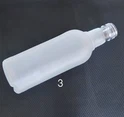
In the cosmetic industry, glass bottles are often frosted to give a luxurious and sophisticated look. The Satin Effect Used On All Kinds Of Cosmetic Bottle can be achieved using specific frosting glass powders. A satin - like finish can be created that is slightly translucent, allowing the product inside to be partially visible while adding an element of elegance. - Architectural Glass
Architectural glass can also benefit from frosting. For example, in some modern buildings, Oil - Sand Effect Flat Glass is used for its unique aesthetic and privacy features. The oil - sand effect can range from a semi - transparent look that provides a soft, hazy view of the outside to a more opaque version for areas where complete privacy is required.
Contact for Procurement and洽谈
If you are interested in our frosting glass powder products and want to discuss your specific requirements, whether it's for achieving a certain level of transparency or for a particular application, please feel free to reach out. We have a team of experts who can provide detailed information and guidance on the best products and application methods for your needs.
References
- "Handbook of Glass Properties" by David R. Uhlmann and Narottam P. Bansal
- "Glass Science and Technology" by Mark A. Janney and Donald R. Uhlmann
- Industry research reports on glass frosting materials and applications.