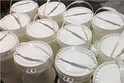
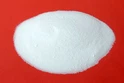
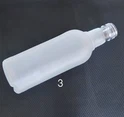
Humidity, an often overlooked environmental factor, plays a significant role in various industrial processes. As a supplier of Quartz Glass Frosting Powder, I've witnessed firsthand how humidity can influence the application of our product. In this blog, I'll delve into the intricate relationship between humidity and the use of Quartz Glass Frosting Powder, shedding light on its implications and offering practical insights for optimal results.
The Science Behind Quartz Glass Frosting Powder
Before we explore the impact of humidity, let's briefly understand the composition and working principle of Quartz Glass Frosting Powder. This specialized powder typically contains chemicals such as hydrofluoric acid salts and other additives. When applied to glass surfaces, these chemicals react with the silica in the glass, etching the surface and creating a frosted or satin - like finish. The reaction is a delicate chemical process that depends on several factors, including temperature, the consistency of the powder mixture, and, importantly, humidity.


Effects of Low Humidity on Quartz Glass Frosting Powder Application
1. Uneven Frosting
In low - humidity environments, the evaporation rate of water from the application mixture is high. When we apply the Quartz Glass Frosting Powder, often mixed with a liquid to form a paste, the rapid evaporation can cause the mixture to dry out too quickly. This leads to an uneven distribution of the chemicals on the glass surface. As a result, some areas may receive more intense etching, while others may be under - etched, creating a patchy and inconsistent frosting effect.
For example, during a dry winter season in a location with minimal humidity, a customer reported that the glass panels they frosted using our powder had visible streaks and uneven opacity. After investigating, we found that the low humidity was causing the mixture to dry on the glass before the chemical reaction could complete uniformly.
2. Reduced Reaction Efficiency
Low humidity can also slow down the chemical reaction between the Quartz Glass Frosting Powder and the glass. With less moisture in the air, the ions in the powder may not dissociate as readily, and the transport of reactants to the glass surface may be hampered. This can result in a longer waiting time for the frosting process to achieve the desired finish. It also means that more powder may be required to get the same level of etching as in a more humid environment, increasing the cost of production for our customers.
3. Increased Dusting
Another issue associated with low humidity is the generation of more dust during the application process. The dry conditions make the powder more likely to break apart and become airborne. Not only does this pose a health risk to the workers handling the powder, but it can also contaminate the work area and the glass itself. Dust particles settling on the glass surface can interfere with the uniform application of the frosting powder, leading to a less - than - perfect finish.
Impact of High Humidity on Quartz Glass Frosting Powder Application
1. Over - Etching
High humidity presents its own set of challenges. When the humidity is too high, there is an excess of moisture in the air. This extra moisture can accelerate the chemical reaction between the Quartz Glass Frosting Powder and the glass. The reaction may occur more rapidly than desired, leading to over - etching of the glass surface. Over - etched glass can become too thin, lose its structural integrity, and have an overly rough or granular appearance.
One of our customers in a tropical region experienced this problem. They were applying the powder during the rainy season when the humidity was consistently above 90%. The glass emerged with a rough and uneven texture that was far from the smooth, satin - like finish they were aiming for.
2. Clumping of the Powder
High humidity can cause the Quartz Glass Frosting Powder to clump. The moisture in the air can cause the particles in the powder to stick together, making it difficult to mix the powder evenly with the liquid to form a smooth paste. Clumped powder particles may not dissolve properly or distribute uniformly on the glass surface, resulting in an inconsistent frosting effect.
3. Mold and Mildew Growth
Excessive humidity can also create an environment conducive to mold and mildew growth on the glass surface, especially if the glass is not thoroughly dried after the frosting process. Mold and mildew not only mar the appearance of the frosted glass but can also be difficult to remove and may indicate an underlying issue with the humidity management during the application process.
Controlling Humidity for Optimal Results
Given the significant impact of humidity on the application of Quartz Glass Frosting Powder, it is crucial to control humidity levels during the frosting process.
1. Using Humidifiers and Dehumidifiers
In environments with low humidity, humidifiers can be used to increase the moisture content in the air. This helps to prevent the rapid drying of the application mixture and ensures a more uniform reaction on the glass surface. Conversely, in high - humidity areas, dehumidifiers can be employed to reduce the moisture in the air, preventing over - etching and clumping of the powder.
2. Monitoring and Recording Humidity
It is essential to regularly monitor and record humidity levels in the work area. This can be done using a humidity sensor or hygrometer. By keeping a log of the humidity levels during the frosting process, we can identify any patterns or issues and make adjustments accordingly.
3. Time of Application
Choosing the right time of day or season for the application can also help manage humidity. For example, in areas with high daytime humidity, it may be better to carry out the frosting process during the early morning or late evening when the humidity is typically lower.
Conclusion
Humidity is a critical factor that can significantly affect the application of Quartz Glass Frosting Powder. Whether it's the uneven frosting and reduced efficiency in low - humidity conditions or the over - etching and clumping in high - humidity environments, understanding and controlling humidity are essential for achieving the desired results.
As a supplier of Quartz Glass Frosting Powder, we are committed to providing our customers with high - quality products and valuable technical support. If you are interested in our Frosted Glass Material or want to achieve a Satin Effect On Flat Glass, or are looking for Glass Frosting Powder Glass Etching Cream Wine Bottle India, do not hesitate to contact us for procurement and further discussions.
References
- Various industry reports on chemical reactions in glass etching processes.
- Personal experience and case studies from customer feedback in different humidity environments.