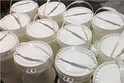
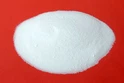
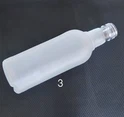
Chemical etching of glass is a fascinating and widely - used technique in various industries, from decorative arts to high - tech manufacturing. As a supplier of chemical etching materials for glass, I have witnessed firsthand the different effects that various acid - based solutions can have on glass etching. In this blog, I will explore the differences in chemical etching of glass using different acid - based solutions.
Hydrofluoric Acid (HF)
Hydrofluoric acid is perhaps the most well - known and commonly used acid for glass etching. Its unique property lies in its ability to react directly with silica (SiO₂), the main component of glass. The chemical reaction can be represented as:
[SiO_{2}+4HF = SiF_{4}\uparrow+2H_{2}O]
The silicon tetrafluoride (SiF₄) produced is a gas that escapes from the reaction site. This reaction is highly exothermic and proceeds relatively quickly.
One of the key advantages of using hydrofluoric acid is its high etching rate. It can create deep etches in a short period, which is beneficial for applications where a significant amount of material needs to be removed. For example, in the production of glass molds, a deep and precise etch is required, and hydrofluoric acid can achieve this efficiently.


However, hydrofluoric acid is extremely dangerous. It is highly corrosive to human tissues and can cause severe burns that may not be immediately painful but can lead to long - term damage. Special safety precautions, such as wearing appropriate protective equipment and working in a well - ventilated area, are essential when handling hydrofluoric acid.
In terms of the etched surface quality, hydrofluoric acid can produce a relatively smooth and uniform surface when the etching process is well - controlled. But if the concentration is too high or the etching time is too long, it can lead to a rough and pitted surface.
Sulfuric Acid (H₂SO₄)
Sulfuric acid is a strong acid, but it does not react directly with silica in the same way as hydrofluoric acid. Instead, it can be used in combination with other substances to etch glass. For example, when sulfuric acid is mixed with ammonium fluoride, it can create an etching solution.
The reaction mechanism is more complex. The ammonium fluoride provides fluoride ions, and sulfuric acid helps to maintain the proper chemical environment for the reaction. The overall reaction still involves the attack on the silica network in the glass.
Sulfuric acid - based etching solutions generally have a slower etching rate compared to hydrofluoric acid. This can be an advantage in some cases, as it allows for more precise control over the etching process. For instance, in the production of fine - detailed glass decorations, a slower etching rate can ensure that the delicate patterns are accurately reproduced.
The etched surface produced by sulfuric acid - based solutions often has a different texture compared to hydrofluoric acid. It may be slightly more matte and have a softer appearance, which is suitable for certain decorative applications like Material For Frosted Glass Decoration.
Hydrochloric Acid (HCl)
Hydrochloric acid is a strong acid but has limited direct reactivity with glass. Alone, it has very little effect on glass etching. However, when combined with other chemicals, such as metal salts or oxidizing agents, it can be used in glass etching processes.
For example, in some cases, a mixture of hydrochloric acid and copper(II) chloride can be used to etch glass. The copper(II) ions can participate in redox reactions on the glass surface, which helps to break down the silica structure.
The etching rate of hydrochloric acid - based solutions is usually slower than that of hydrofluoric acid. The etched surface may have a more irregular texture, which can be used to create unique visual effects in glass art. It is also relatively safer to handle compared to hydrofluoric acid, although proper safety measures should still be taken.
Phosphoric Acid (H₃PO₄)
Phosphoric acid is a weak acid and has a very low reactivity with glass on its own. But when used in combination with other acids or additives, it can play a role in glass etching.
In some etching formulations, phosphoric acid can act as a buffer to control the pH of the solution. It can also help to modify the surface properties of the etched glass. For example, it can improve the adhesion of subsequent coatings or treatments on the etched glass surface.
The etching rate of phosphoric acid - based solutions is very slow, and the etch depth is usually shallow. This makes it suitable for applications where only a minor surface modification is required, such as creating a slight surface roughness for anti - glare purposes.
Comparison of Different Acid - Based Solutions
Etching Rate
As mentioned above, hydrofluoric acid has the fastest etching rate, followed by sulfuric acid - based solutions (when combined with appropriate additives), hydrochloric acid - based solutions, and phosphoric acid - based solutions in descending order. The choice of acid - based solution depends on the specific requirements of the etching project. If a large amount of material needs to be removed quickly, hydrofluoric acid is the obvious choice. But if precision and slow, controlled etching are needed, sulfuric or hydrochloric acid - based solutions may be more suitable.
Surface Quality
Hydrofluoric acid can produce a smooth and uniform surface when well - controlled, but improper use can lead to a rough surface. Sulfuric acid - based solutions often result in a more matte and softer - looking surface. Hydrochloric acid - based solutions can create an irregular texture, and phosphoric acid - based solutions usually produce a very shallow and slightly rough surface.
Safety
Hydrofluoric acid is the most dangerous among these acids, requiring strict safety protocols. Sulfuric acid, hydrochloric acid, and phosphoric acid are relatively safer but still need to be handled with care.
Applications and the Choice of Acid - Based Solutions
In the decorative glass industry, the choice of acid - based solution depends on the desired aesthetic effect. For a clear and deep etch, hydrofluoric acid may be used. For a more frosted and soft - looking surface, sulfuric acid - based solutions are a good option. You can find more information about Acid Etching for Glass.
In the semiconductor industry, where precision is of utmost importance, hydrofluoric acid is often used due to its high etching rate and ability to create precise patterns. However, the safety concerns must be carefully addressed.
In the production of glassware with anti - glare properties, phosphoric acid - based solutions can be used to create a slight surface roughness.
Our Role as a Supplier
As a supplier of Chemical Etching Materials For Glass Decoration, we understand the different requirements of our customers. We offer a wide range of acid - based solutions and related chemicals for glass etching. Our products are carefully formulated to ensure high quality and consistent performance.
We also provide technical support to our customers. Whether you are a small - scale glass artist or a large - scale industrial manufacturer, we can help you choose the most suitable acid - based solution for your specific application. We can offer advice on safety measures, etching processes, and troubleshooting.
If you are interested in our chemical etching materials for glass, we encourage you to contact us for a detailed discussion. We are always ready to assist you in achieving the best results in your glass etching projects.
References
- Smith, J. (2018). Chemical Processes in Glass Etching. Glass Technology Journal, 45(2), 123 - 135.
- Johnson, A. (2019). Safety Considerations in Acid - Based Glass Etching. Industrial Safety Magazine, 32(4), 56 - 63.
- Brown, C. (2020). Surface Properties of Etched Glass Using Different Acid Solutions. Materials Science Review, 55(3), 201 - 215.