In the ever-evolving landscape of dental technology, the quest for more precise, efficient, and aesthetically pleasing solutions is relentless. One technology that has been making waves across various industries is 3D laser engraving. As a 3D Laser Engraving supplier, I often encounter questions about the applicability of this technology in the dental field. In this blog, we will explore whether 3D laser engraving can be used on dental materials, delving into its potential benefits, challenges, and current applications.
Understanding 3D Laser Engraving
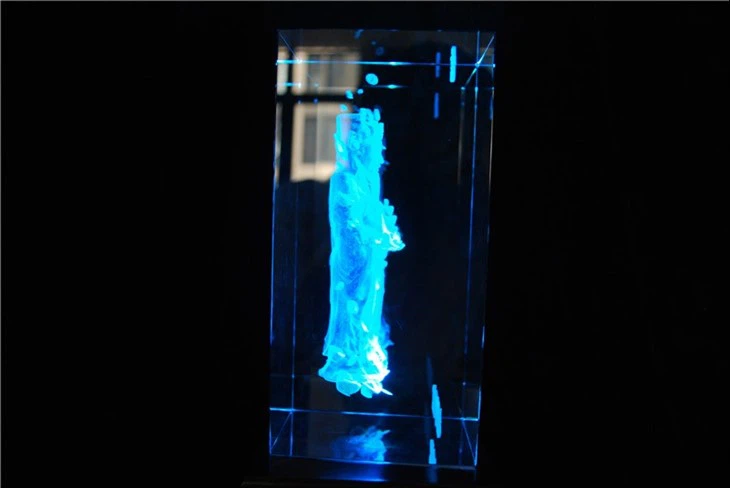
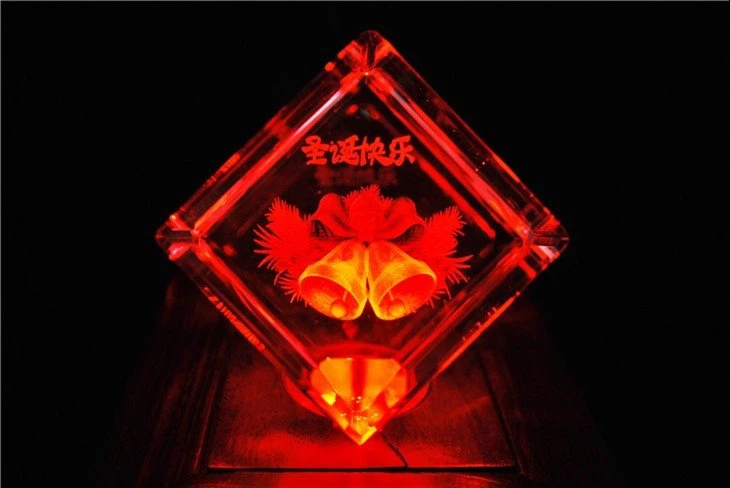
Before we discuss its use in dentistry, let's first understand what 3D laser engraving is. 3D laser engraving is a process that uses a high - powered laser beam to create three - dimensional designs, patterns, or markings on a material's surface or within its volume. The laser can be precisely controlled to remove material layer by layer, allowing for highly detailed and accurate engravings. This technology has been widely used in industries such as jewelry making, glass art, and manufacturing for creating intricate designs on a variety of materials. For instance, you can explore some of the beautiful creations made possible by 3D laser engraving on our 3D Laser Engraving Crystal and 3D Laser Engraving Crystal Craft pages.
Dental Materials and Their Properties
Dental materials are a diverse group, each with its own unique properties. Some common dental materials include metals (such as titanium and stainless steel), ceramics (like zirconia and porcelain), and polymers (such as acrylics). Metals are known for their strength and durability, making them suitable for dental implants and prosthetics. Ceramics offer excellent aesthetics and biocompatibility, often used in crowns and veneers. Polymers are lightweight and can be easily molded, commonly used in dentures and orthodontic appliances.
Potential Benefits of 3D Laser Engraving on Dental Materials
Precision and Customization
One of the most significant advantages of 3D laser engraving in dentistry is its ability to provide unparalleled precision. Dental treatments often require highly customized solutions to fit the unique anatomy of each patient. With 3D laser engraving, it is possible to create detailed engravings on dental implants, crowns, or orthodontic appliances that match the patient's specific needs. For example, on a dental implant, laser engraving can be used to create micro - patterns that enhance osseointegration, the process by which the implant fuses with the surrounding bone. This can lead to more stable and long - lasting implants.
Aesthetics
In cosmetic dentistry, aesthetics play a crucial role. 3D laser engraving can be used to create intricate designs on dental restorations, such as adding decorative elements to porcelain veneers or creating personalized markings on dental jewelry. This not only enhances the appearance of the dental work but also allows patients to express their individuality. For those interested in the aesthetic possibilities of 3D laser engraving, our 3D Laser Engraving Glass page showcases some of the amazing visual effects that can be achieved.
Identification and Traceability
In the dental industry, proper identification and traceability of dental products are essential for quality control and patient safety. 3D laser engraving can be used to mark dental implants, crowns, and other prosthetics with unique identifiers such as serial numbers, batch numbers, or patient - specific information. This helps in tracking the origin and history of the dental product, ensuring that any potential issues can be easily traced back to their source.
Challenges in Using 3D Laser Engraving on Dental Materials
Material Compatibility
Not all dental materials are equally suitable for 3D laser engraving. Some materials may react differently to the laser, leading to issues such as cracking, discoloration, or changes in their mechanical properties. For example, polymers may melt or char when exposed to the high - energy laser beam, while ceramics may develop micro - cracks if the engraving process is not carefully controlled.
Cost and Equipment
Implementing 3D laser engraving technology in a dental practice requires a significant investment in equipment and training. High - quality 3D laser engraving machines can be expensive, and dental professionals need to be trained to operate them safely and effectively. Additionally, the cost of maintenance and calibration of the equipment also adds to the overall cost.
Regulatory Requirements
The dental industry is highly regulated to ensure patient safety. Any new technology or process used in dentistry must comply with strict regulatory standards. 3D laser engraving on dental materials may require additional testing and certification to ensure that it does not compromise the safety or performance of the dental products.
Current Applications of 3D Laser Engraving in Dentistry
Dental Implants
As mentioned earlier, 3D laser engraving can be used to enhance the surface properties of dental implants. By creating micro - patterns on the implant surface, the osseointegration process can be improved, leading to better long - term stability. Some manufacturers are already using 3D laser engraving to create unique implant designs that offer better clinical outcomes.
Orthodontic Appliances
In orthodontics, 3D laser engraving can be used to mark orthodontic brackets or aligners with patient - specific information or decorative elements. This not only helps in identifying the appliance but also adds a personal touch for the patient.
Dental Prosthetics
For dental prosthetics such as crowns and bridges, 3D laser engraving can be used to create detailed anatomical features or decorative patterns. This can improve the aesthetics of the prosthetics and make them more closely resemble natural teeth.
Conclusion
In conclusion, 3D laser engraving has significant potential in the dental field. It offers numerous benefits such as precision, customization, aesthetics, and identification. However, it also faces challenges in terms of material compatibility, cost, and regulatory requirements. Despite these challenges, we are seeing an increasing number of applications of 3D laser engraving in dentistry, and the technology is expected to continue to evolve in the coming years.
If you are a dental professional or a dental product manufacturer interested in exploring the possibilities of 3D laser engraving for your dental materials, we invite you to contact us for a procurement discussion. Our team of experts can provide you with more information about our 3D laser engraving solutions and how they can be tailored to your specific needs.
References
- "Dental Materials: Properties and Manipulation" by John M. Powers and Paul W. Sakaguchi.
- "Principles and Practice of Laser Dentistry" by Anthony J. DiVito and Joseph F. Kao.
- Research articles on 3D laser engraving technology in peer - reviewed dental journals.