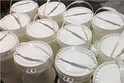
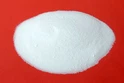
Quartz glass frosting powder is a remarkable product that has revolutionized the glass - finishing industry. As a supplier of quartz glass frosting powder, I am often asked about how this powder works. In this blog, I will delve into the scientific principles behind its operation, its applications, and why it is a great choice for various glass - related projects.
The Composition of Quartz Glass Frosting Powder
Quartz glass frosting powder is a carefully formulated mixture of chemicals. The main components usually include fluorides such as ammonium bifluoride and sodium fluoride. These fluorides are the key players in the frosting process. In addition to fluorides, there may be other additives like surfactants and buffers. Surfactants help to improve the wetting ability of the powder solution on the glass surface, ensuring an even distribution of the reactive chemicals. Buffers, on the other hand, help to maintain the pH level of the solution within an optimal range for the frosting reaction.
The Chemical Reaction Behind Frosting
The frosting process is essentially a chemical etching reaction. When the quartz glass frosting powder is mixed with water to form a solution, the fluoride ions in the solution react with the silicon dioxide (SiO₂) in the glass. The chemical reaction can be represented by the following simplified equation:
SiO₂ + 6HF → H₂SiF₆ + 2H₂O
In the actual situation, since the fluoride is usually in the form of ammonium bifluoride (NH₄HF₂) or sodium fluoride (NaF), the reaction is more complex. For example, ammonium bifluoride can dissociate in water to release fluoride ions (F⁻) and hydrogen fluoride (HF). These fluoride - containing species react with the glass surface.
The reaction starts at the microscopic level. The fluoride ions attack the silicon - oxygen bonds in the glass network. As the reaction progresses, the smooth surface of the glass is gradually broken down. Micro - sized pits and irregularities are formed on the glass surface. These irregularities scatter light in different directions when light hits the glass, giving the glass a frosted appearance.


Factors Affecting the Frosting Process
Several factors can influence the outcome of the frosting process.
Concentration of the Frosting Solution
The concentration of the quartz glass frosting powder in the solution is crucial. A higher concentration generally leads to a faster reaction rate and a more pronounced frosting effect. However, if the concentration is too high, the reaction may be too violent, resulting in an uneven or overly rough frosting. On the other hand, a very low - concentration solution may take a long time to produce a noticeable frosting effect or may not etch the glass effectively.
Temperature
Temperature also plays an important role. Higher temperatures usually increase the reaction rate because the kinetic energy of the reactant molecules is higher. At higher temperatures, the fluoride ions move more rapidly and can react with the glass surface more quickly. But if the temperature is too high, it may be difficult to control the reaction, and the frosting quality may be affected. A moderate temperature, usually around room temperature, is often recommended for a more controlled and uniform frosting process.
Immersion Time
The length of time the glass is immersed in the frosting solution is directly related to the depth of etching and the degree of frosting. Longer immersion times generally result in a more opaque and frosted appearance. However, over - immersion can lead to excessive etching, which may weaken the glass and cause it to become brittle.
Surface Cleanliness of the Glass
Before applying the frosting solution, the glass surface must be clean. Any dirt, grease, or fingerprints on the glass can prevent the uniform distribution of the frosting solution and lead to uneven frosting. Therefore, it is essential to clean the glass thoroughly with a suitable cleaning agent before the frosting process.
Applications of Quartz Glass Frosting Powder
Quartz glass frosting powder has a wide range of applications in different industries.
Architectural and Interior Design
In the field of architecture and interior design, frosted glass is highly sought - after. It can be used for partitions, doors, and windows. The frosted effect provides privacy while still allowing light to pass through. You can find more information about its use in architectural applications on our page Glass Tiles Frosted Glass Furniture Glass Decorative Glass Certain Wall Architecture Plant Wall. The frosted glass can add an element of elegance and modernity to any space.
Decorative Glassware
For decorative glassware such as vases, bowls, and glass sculptures, the quartz glass frosting powder can be used to create unique and artistic effects. The frosted finish can enhance the aesthetic appeal of the glassware, making it more visually interesting.
Packaging Industry
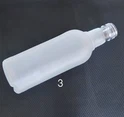
In the packaging industry, especially for glass bottles of wine, soda, and soft drinks, frosting can be used to create a beautiful and distinctive look. You can learn more about its application in this area on our page Wine Soda Botte Soft Drink Jar Etch Frost Beautiful Effect Easy Clear Preventing Finger Prints. Frosted glass bottles not only look more upscale but also have the advantage of preventing fingerprints from being easily visible on the surface.
Matt Glass Decoration
For matt glass decoration, the quartz glass frosting powder provides a cost - effective and efficient solution. You can find more details about this application on our page Chemical For Matt Glass Decoraiton. It can be used to create different patterns and designs on glass, which are widely used in the decoration of shops, restaurants, and hotels.
Why Choose Our Quartz Glass Frosting Powder
As a supplier, we take pride in offering high - quality quartz glass frosting powder. Our powder is carefully formulated to ensure a consistent and reliable frosting effect. We use high - purity raw materials, which means that the reaction is more predictable and the frosting quality is better.
Our product is also easy to use. The detailed instructions provided with the powder make it accessible for both professional glass - processing companies and DIY enthusiasts. In addition, we offer different grades of frosting powder to meet the diverse needs of our customers. Whether you need a light, delicate frosting or a more heavy - duty opaque effect, we have the right product for you.
Contact Us for Purchase and Consultation
If you are interested in our quartz glass frosting powder, or if you have any questions about its application, please feel free to contact us. We are always ready to provide you with professional advice and support. Whether you are a small - scale crafter or a large - scale glass - manufacturing company, we can offer you the best solutions for your glass - frosting needs.
References
- "The Chemistry of Glass" by Paul Varshneya.
- "Handbook of Glass Properties" edited by Helmut Scholze.
- Research papers on glass etching reactions in scientific journals such as the Journal of Non - Crystalline Solids.