Is Quartz Glass Frosting Powder magnetic?
As a supplier of Quartz Glass Frosting Powder, I often encounter various inquiries from customers regarding the properties and applications of our product. One question that has come up recently is whether Quartz Glass Frosting Powder is magnetic. In this blog post, I will delve into this topic, exploring the scientific aspects behind the magnetism of Quartz Glass Frosting Powder and its implications for our customers.

To understand whether Quartz Glass Frosting Powder is magnetic, we first need to look at its composition. Quartz glass is primarily made of silicon dioxide (SiO₂), which is a non - magnetic material. Silicon dioxide is a covalent compound with a tetrahedral structure, where each silicon atom is bonded to four oxygen atoms. This structure does not have unpaired electrons, which are the key factors for a material to exhibit magnetic properties.

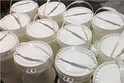
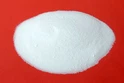
The frosting powder we supply is designed to create a frosted effect on glass surfaces. It usually contains other additives in addition to the base quartz glass powder to enhance its frosting ability, such as fluorides and other chemicals. However, these additives are also non - magnetic substances in most cases. Fluorides, for example, are ionic compounds that do not possess magnetic characteristics.
In scientific terms, magnetism can be classified into different types: diamagnetism, paramagnetism, and ferromagnetism. Diamagnetic materials are weakly repelled by a magnetic field, paramagnetic materials are weakly attracted to a magnetic field, and ferromagnetic materials are strongly attracted and can retain their magnetization. Quartz glass and the typical additives in our frosting powder fall into the diamagnetic category. Their electrons are paired, and when placed in a magnetic field, they generate a weak magnetic field in the opposite direction, resulting in a very slight repulsion.

The lack of magnetic properties in Quartz Glass Frosting Powder has several practical implications. Firstly, it means that the powder will not be affected by magnetic fields during storage and transportation. There is no risk of the powder clumping together due to magnetic attraction, which ensures the stability and uniformity of the product. Secondly, when using the frosting powder in industrial processes, there is no need to worry about magnetic interference with other equipment. This is especially important in high - precision manufacturing environments where magnetic fields can disrupt the operation of sensitive instruments.
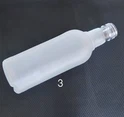
Now, let's talk about the applications of our Quartz Glass Frosting Powder. One of the popular applications is for creating Glass Cosmetic Bottle With Satin Effect. The frosted finish gives the cosmetic bottles an elegant and luxurious look, enhancing the overall appeal of the products. The non - magnetic property of the frosting powder ensures that it does not leave any unwanted residues or cause any damage to the cosmetic products inside the bottles.
Another application is Satin Effect Flat Glass With Pattern. The powder can be used to create unique patterns and a smooth satin - like finish on flat glass surfaces. This type of glass is widely used in interior decoration, such as in partitions and decorative panels. The non - magnetic nature of the powder allows for a clean and precise application, resulting in high - quality glass products.
For architectural purposes, our Quartz Glass Frosting Powder can be used in Architectural Glass Wall Bathroom Enclosed Interior Decoration Block. The frosted glass provides privacy while still allowing light to pass through, creating a comfortable and aesthetically pleasing environment. The non - magnetic property ensures that the powder does not interfere with the installation and long - term performance of the glass walls.
In conclusion, Quartz Glass Frosting Powder is not magnetic. Its non - magnetic nature is a result of its composition, mainly consisting of non - magnetic silicon dioxide and other non - magnetic additives. This property offers many advantages in terms of storage, transportation, and application in various industries.
If you are interested in our Quartz Glass Frosting Powder or have any further questions about its properties and applications, please feel free to contact us for procurement and further discussions. We are committed to providing high - quality products and excellent customer service.
References
- "Introduction to Solid State Physics" by Charles Kittel. This classic textbook provides in - depth knowledge about the physical properties of materials, including magnetism.
- "Glass Science and Technology" series. These books cover various aspects of glass, from its composition to its manufacturing and applications. They are a great resource for understanding the properties of quartz glass and related materials.