Agitation plays a pivotal role in various industrial processes, including the chemical etching of glass. As a leading supplier of [Chemical Etching Of Glass], I have witnessed firsthand the profound impact that agitation can have on the quality, efficiency, and overall outcome of the glass - etching process. In this blog post, we will explore the multifaceted effects of agitation on chemical etching of glass and discuss its implications for the glass - etching industry.
Understanding Chemical Etching of Glass
Before delving into the effects of agitation, it is important to understand the basic principle of chemical etching of glass. Chemical etching is a process that uses acidic or basic solutions to remove a thin layer of the glass surface, resulting in a frosted or patterned appearance. This process is commonly used in the production of decorative glass, electronic displays, and optical components.
The etching solution typically contains hydrofluoric acid (HF) or other strong acids that react with the silica (SiO₂) in the glass. The reaction can be simplified as follows:
(SiO₂ + 4HF → SiF₄ + 2H₂O)
Silicon tetrafluoride ((SiF₄)) is a volatile gas that escapes from the solution, and the glass surface is gradually dissolved.
The Role of Agitation in Chemical Etching
Agitation refers to the movement or stirring of the etching solution. It can be achieved through various methods, such as mechanical stirring, ultrasonic vibration, or circulation of the solution. The main functions of agitation in chemical etching of glass are as follows:
1. Uniformity of Etching
One of the most significant effects of agitation is to ensure uniform etching across the glass surface. Without agitation, the etching reaction tends to occur preferentially at areas where the etching solution is in direct contact with the glass. This can lead to uneven etching, with some areas being etched more deeply than others.
For example, in a static etching bath, the concentration of the etching solution may decrease near the glass surface as the reaction progresses. The depleted solution forms a boundary layer that hinders the diffusion of fresh etching agents to the glass surface. Agitation disrupts this boundary layer, allowing fresh etching solution to continuously reach the glass surface, thereby promoting a more uniform etching rate.


2. Removal of Reaction By - Products
During the chemical etching process, reaction by - products such as silicon tetrafluoride ((SiF₄)) and other salts are generated. These by - products can accumulate on the glass surface and impede the etching reaction. Agitation helps to remove these by - products from the glass surface and disperse them into the bulk solution.
In the case of ultrasonic agitation, the high - frequency vibrations create tiny bubbles in the solution. When these bubbles collapse near the glass surface, they generate shock waves that can dislodge the reaction by - products. This not only improves the etching efficiency but also reduces the risk of surface defects caused by the accumulation of by - products.
3. Enhanced Mass Transfer
Mass transfer is a crucial factor in chemical etching. It involves the movement of reactants from the bulk solution to the glass surface and the movement of reaction products from the glass surface to the bulk solution. Agitation enhances mass transfer by increasing the convection in the solution.
Convection improves the diffusion of the etching agents (such as HF) towards the glass surface and the diffusion of reaction products away from the glass surface. As a result, the rate of the etching reaction is increased. In industrial applications, enhanced mass transfer due to agitation can significantly reduce the etching time, leading to higher productivity.
Impact on Etching Quality
The effects of agitation on etching quality are far - reaching. A well - agitated etching process can produce glass with a smooth and consistent surface finish. This is particularly important in applications where optical clarity and aesthetic appeal are required.
For instance, in the production of decorative glassware, a uniform and smooth etched surface enhances the visual appearance of the product. In electronic displays, a high - quality etched glass surface can improve the performance of the display by reducing light scattering and reflection.
On the other hand, inadequate agitation can result in a variety of surface defects. These may include streaks, spots, or uneven etching depths. These defects can significantly reduce the value of the etched glass product and may even render it unsuitable for its intended application.
Influence on Etching Rate
Agitation has a direct impact on the etching rate. As mentioned earlier, agitation enhances mass transfer, which is a key factor in determining the reaction rate. By increasing the supply of fresh etching agents to the glass surface and removing reaction products, agitation accelerates the chemical reaction between the etching solution and the glass.
In fact, many industrial etching processes are optimized to operate at a specific agitation intensity to achieve the desired etching rate. However, it is important to note that excessive agitation can also have negative consequences. For example, if the agitation is too strong, it may cause mechanical damage to the glass surface, such as scratching or cracking.
Our Offerings for Chemical Etching of Glass
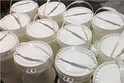
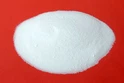
As a trusted supplier in the field of [Chemical Etching Of Glass], we offer a wide range of high - quality products and solutions. Our Environmentally Friendly Etching Powder is designed to provide efficient and safe etching while minimizing the environmental impact. It contains carefully selected ingredients that ensure a uniform and controllable etching process.
Our Chemical Etching for Glass solutions are formulated to meet the diverse needs of different applications. Whether you are working on decorative glass, electronic components, or optical devices, our products can deliver excellent results.
In addition, we also provide a comprehensive guide on the Materials Needed for Glass Etching. This guide helps our customers to select the right materials for their specific etching requirements, ensuring a successful and high - quality etching process.
Conclusion
In conclusion, agitation has a significant effect on the chemical etching of glass. It plays a crucial role in ensuring uniformity of etching, removing reaction by - products, enhancing mass transfer, improving etching quality, and controlling the etching rate. By understanding the effects of agitation, glass - etching manufacturers can optimize their processes to achieve better results.
As a leading supplier of [Chemical Etching Of Glass], we are dedicated to providing our customers with the best products and support. If you are looking for high - quality glass - etching materials and solutions, we invite you to contact us to discuss your specific needs. Our team of experts is always ready to assist you in finding the most suitable products for your applications. Let's work together to achieve excellent glass - etching results!
References
- Jones, A. (2018). Chemical Etching of Glass: Principles and Applications. Springer.
- Smith, B. (2019). The Impact of Agitation on Surface Reactions in Industrial Processes. Journal of Industrial Chemistry, 45(2), 123 - 135.
- Williams, C. (2020). Optimization of Chemical Etching Parameters for Glass Substrates. International Journal of Materials Science and Engineering, 18(3), 45 - 58.