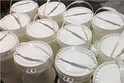
Hey there! As a proud supplier of Glass Frosting Chemical, I've been in the thick of the glass - frosting industry for quite some time. One question that pops up frequently is, "What is the effect of glass frosting chemical on the strength of glass?" Well, let's roll up our sleeves and dig into this topic.
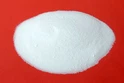
First off, let's understand what glass frosting chemicals do. These chemicals are used to transform the smooth, transparent surface of glass into a frosted, opaque one. There are different types of products in this category, like the Glass Frosting Powder. This powder is mixed with certain substances to create a solution that etches the glass surface.


The chemical process of glass frosting involves the reaction between the chemicals and the glass. Typically, hydrofluoric acid or its derivatives are used in glass - frosting solutions. These substances react with the silica in the glass, breaking down the chemical bonds on the surface. This is not just a simple cosmetic change; it has a direct impact on the micro - structure of the glass.
On the surface level, the glass undergoes a visible transformation. It goes from being clear to having a soft, hazy appearance. But what about its strength? Well, the initial reaction would be to think that if the surface is being etched, it must weaken the glass. And to an extent, that's true. The surface of the glass is essentially being "attacked" by the chemical, which creates microscopic cracks and pits.
These microscopic imperfections can act as stress concentrators. When the glass is subjected to external forces, like pressure or impact, these areas are the first to experience higher stress levels. For example, if you were to tap a frosted glass with a small object, the stress from that tap would be concentrated around these micro - cracks. This can cause the glass to break more easily compared to non - frosted glass under similar conditions.
However, the story doesn't end there. The effect on strength can vary depending on how the frosting process is carried out. If the frosting chemical is applied evenly and in the right concentration, the impact on strength might be relatively minor. Professional glass - frosting operations take great care to control these factors. They know that if they use too strong a chemical solution or apply it too thickly, they risk severely compromising the glass's strength.
Let's look at some real - world applications. Take Gold Oil - Sand Effect Patterned Float Glass. This type of glass is often used in high - end interior design. The frosting gives it a unique, decorative look, but if the strength is too compromised, it won't be suitable for practical use. Designers and manufacturers need to balance the aesthetic appeal of the frosted effect with the need for the glass to withstand normal wear and tear.
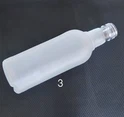
Another application is Satin Effect On Glass Cosmetic Bottle. Cosmetic bottles are handled frequently, and they need to be strong enough not to break easily. The glass - frosting chemical used here must be carefully selected and applied to ensure that the bottle retains enough strength while still achieving the desired satin finish.
In some cases, post - treatment processes can be used to mitigate the loss of strength. For example, heat treatment or chemical strengthening can be applied after the frosting process. Heat treatment can help to relieve some of the internal stresses in the glass and close up some of the micro - cracks. Chemical strengthening involves immersing the glass in a bath of molten salt, which replaces some of the ions in the glass surface with larger ions. This creates a compressive stress layer on the surface, making the glass more resistant to breakage.
But these post - treatment methods also have their limitations. They can add to the cost and complexity of the manufacturing process. And in some cases, they may not completely reverse the loss of strength caused by the frosting chemical.
So, when it comes to choosing a glass - frosting chemical, it's crucial to consider not only the aesthetic result but also the impact on strength. As a supplier, I offer a range of products that are formulated to provide a good balance between these two factors. Our team of experts can also offer advice on the best application techniques to minimize the effect on strength.
If you're in the market for glass - frosting chemicals and are worried about the impact on glass strength, don't hesitate to reach out. We're here to help you find the right solution for your specific needs. Whether you're a glass manufacturer, an interior designer, or a cosmetics brand looking for the perfect bottle finish, we've got you covered.
Let's have a chat about your project, and we can work together to ensure that you get a high - quality frosted glass product that meets both your aesthetic and strength requirements. So, don't be shy! Drop us a line and start the conversation about your glass - frosting needs today.
References
- Glass Science and Technology Handbook
- Various research papers on glass corrosion and strength from academic journals in materials science.