Hey there! As a supplier of Chemical Etching For Glass, I often get asked about the reaction rate of chemical etching for glass. It's a super important topic, especially if you're in the business of glass decoration or manufacturing. So, let's dive right in and break it down.
First off, what exactly is chemical etching for glass? Well, it's a process where we use specific chemicals to remove the surface layer of glass, creating different patterns, textures, or just altering its appearance. It's a popular method in the glass industry because it allows for precise and detailed designs.
Now, the reaction rate of chemical etching for glass is influenced by several factors. One of the main ones is the type of chemical used. There are different Glass Etching Chemical available in the market, each with its own unique properties and reactivity. For example, hydrofluoric acid is a commonly used chemical for glass etching. It reacts relatively quickly with glass because it can break down the silica structure in the glass. However, it's also extremely dangerous to handle, so proper safety precautions need to be taken.
Another factor that affects the reaction rate is the concentration of the chemical. Generally, a higher concentration of the etching chemical will result in a faster reaction rate. But there's a catch. If the concentration is too high, it can lead to uneven etching or even damage the glass. So, finding the right balance is crucial.
The temperature also plays a significant role. Higher temperatures usually increase the reaction rate. When the temperature goes up, the molecules in the chemical move more rapidly, which means they collide with the glass surface more frequently and with more energy. This leads to a faster etching process. However, just like with concentration, there's an optimal temperature range. If it gets too hot, it can cause the chemical to evaporate too quickly or even change its chemical properties.
The surface area of the glass is another important consideration. A larger surface area exposed to the etching chemical will result in a faster overall reaction. This is because there are more sites for the chemical to react with the glass. For instance, if you're etching a large sheet of glass compared to a small piece, the large sheet will etch faster, assuming all other conditions are the same.
Now, let's talk about the time factor. The longer the glass is exposed to the etching chemical, the more etching will occur. But again, it's not a linear relationship. After a certain point, the reaction rate may slow down as the chemical gets depleted or as a layer of reaction products builds up on the glass surface, which can act as a barrier.
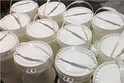
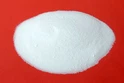
As a supplier, I know that choosing the right Material Used for Glass Etching is essential for getting the desired reaction rate and quality of etching. There are various materials available, and each has its own characteristics. Some materials are more suitable for fine, detailed etching, while others are better for creating a more textured or frosted look.
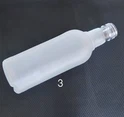
When it comes to glass decoration, Chemical Etching Materials For Glass Decoration are in high demand. They offer a great way to add a unique and personalized touch to glass products. Whether it's for creating beautiful glass art, decorative glassware, or architectural glass elements, chemical etching can achieve amazing results.
But how do you control the reaction rate to get the perfect etching? Well, it takes a bit of experimentation and experience. You need to test different combinations of chemicals, concentrations, temperatures, and exposure times. It's also a good idea to start with small samples to see how the glass reacts under different conditions.
In our company, we've spent a lot of time researching and developing the best etching processes. We offer a wide range of high - quality etching materials that are carefully formulated to give consistent and excellent results. Our products are designed to be easy to use, while also providing a good balance between reaction rate and safety.
If you're in the business of glass decoration or manufacturing and are looking for reliable Chemical Etching Materials For Glass Decoration, we'd love to hear from you. Whether you're a small - scale artist or a large - scale manufacturer, we can provide you with the right solutions for your needs.

Contact us to discuss your requirements and let's start a conversation about how we can help you achieve the best glass etching results. We're here to support you every step of the way, from choosing the right materials to providing technical advice.
References
- Smith, J. (2018). "Principles of Glass Etching". Glass Technology Journal.
- Johnson, A. (2020). "Chemical Reactions in Glass Etching". Chemical Industry Review.