Hey there! As a supplier of Quartz Glass Frosting Powder, I often get asked a bunch of questions about the stuff. One question that pops up quite a bit is, "What is the refractive index of the frosted glass made with Quartz Glass Frosting Powder?" Let's dig into this topic and see what we can find out.
First off, let's understand what refractive index is. In simple terms, the refractive index of a material tells us how much light bends when it passes through that material. It's a measure of how much the speed of light changes as it moves from one medium (like air) into another (like glass). Different materials have different refractive indices, and this property affects how we see things through that material.
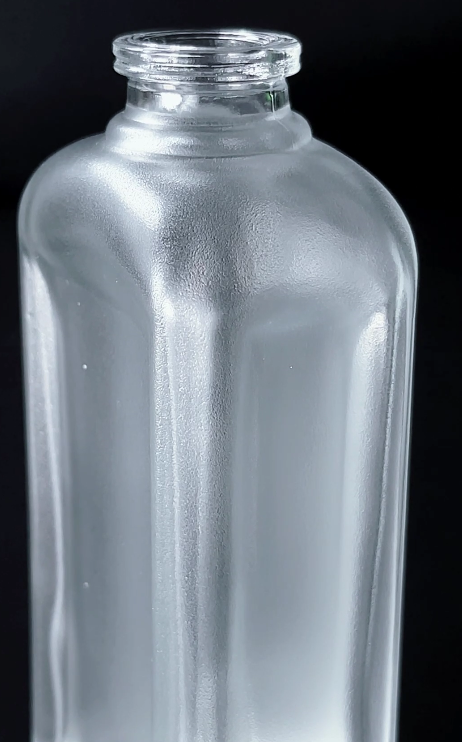

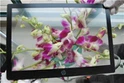
Now, when we talk about frosted glass made with Quartz Glass Frosting Powder, things get a bit more complicated. Frosted glass is different from regular clear glass because it has a rough surface. This rough surface scatters light in all directions, which gives frosted glass its characteristic hazy appearance.
The refractive index of the base quartz glass before frosting is typically around 1.45 - 1.46. But once we apply the Quartz Glass Frosting Powder to turn it into frosted glass, the effective refractive index becomes a bit of a tricky thing to measure. That's because the scattering of light due to the rough surface makes it hard to define a single, well - behaved refractive index like we do for clear, smooth glass.
When light hits the frosted glass surface, instead of passing through in an orderly way like it does with clear glass, it bounces off the tiny bumps and irregularities on the surface. This scattering means that the light rays follow all sorts of paths through the glass, and it's not as straightforward to calculate the overall bending of light.
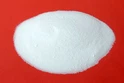
To get a better understanding, let's think about how the Quartz Glass Frosting Powder works. When we apply the powder to the glass surface, it chemically etches the glass, creating those tiny rough spots. The depth and density of these etches can vary depending on how we apply the powder - things like the concentration of the powder solution, the application time, and the temperature.
If the etches are very shallow and sparse, the frosted glass might still have a refractive index that's somewhat close to the original quartz glass. But if the etches are deep and dense, the light scattering will be more significant, and the concept of a single refractive index becomes less meaningful.
Let me share some practical applications of frosted glass made with our Quartz Glass Frosting Powder. For example, take a look at the Interior Decorative Door With Satin Effect. The frosted glass on these doors gives them a stylish and private look. The scattering of light means that you can't see clearly through the door, but it still lets in plenty of light, creating a nice, soft glow inside the room.
Another great application is in the production of glass bottles. Our Water - based Glass Frosting Powder To Etch Soda Lime Glass Bottle Preventing Finger Prints is perfect for this. Frosted glass bottles not only look more elegant but also hide fingerprints, which is a big plus for products on the shelves. And if you're wondering how to achieve that perfect matt surface on a bottle, check out How To Produce Matt Surface On Bottle.
Now, you might be thinking, "Okay, this is all interesting, but why does it matter?" Well, understanding the behavior of light in frosted glass can be really important in some industries. For example, in the lighting industry, designers need to know how frosted glass will affect the distribution of light from a lamp. If they use frosted glass with a certain scattering pattern, they can create different lighting effects - maybe a soft, diffused light for a cozy living room or a more focused, indirect light for a display case.
In architecture, frosted glass is often used for partitions and windows. Architects need to consider how the frosted glass will interact with natural light to create the right atmosphere inside a building. If they know more about the light - scattering properties related to the refractive index (even if it's a complex concept for frosted glass), they can make better design decisions.
As a supplier of Quartz Glass Frosting Powder, I've seen firsthand how versatile our product is. We've worked with customers in various industries, from interior design to manufacturing, and they all have different requirements for their frosted glass.
Some customers want a very light frosting, where the glass still lets in a lot of light and has only a slight haze. For these applications, the light scattering is relatively mild, and the glass might still retain some of the optical properties closer to the original quartz glass. Other customers, on the other hand, need a heavy - duty frosting for maximum privacy, like in bathroom partitions. In these cases, the light scattering is much more intense, and the behavior of light through the glass is quite different.
If you're in the market for high - quality Quartz Glass Frosting Powder, we're here to help. Whether you're a small - scale DIY enthusiast or a large - scale manufacturer, we can provide you with the right product for your needs. Our powder is easy to use, and we can offer technical support to make sure you get the best results.
If you have any questions about our Quartz Glass Frosting Powder, or if you want to discuss your specific project requirements, don't hesitate to reach out. We're always happy to have a chat and see how we can work together to create the perfect frosted glass for your application.
References:
- Physics textbooks on optics and glass properties
- Industry reports on glass manufacturing and finishing processes