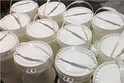
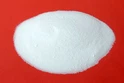
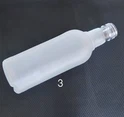
As a supplier of glass frosting chemicals, I've witnessed firsthand the intricate relationship between temperature and the performance of these specialized products. Glass frosting chemicals are used to create a frosted or satin-like finish on glass surfaces, which is not only aesthetically pleasing but also offers practical benefits such as privacy and reduced glare. Understanding how temperature affects their performance is crucial for achieving consistent and high-quality results.
Chemical Reaction Kinetics
The performance of glass frosting chemicals is fundamentally tied to the chemical reactions that occur between the chemicals and the glass surface. These reactions are highly temperature-dependent, following the principles of chemical kinetics. At higher temperatures, the molecules in the glass frosting chemicals have more kinetic energy, which means they move faster and collide more frequently. This increased collision frequency leads to a higher reaction rate, as more reactant molecules have the energy required to overcome the activation energy barrier and form products.
Conversely, at lower temperatures, the molecules move more slowly, and the reaction rate decreases. This can result in a longer processing time for achieving the desired frosting effect. For example, if you're using a glass frosting powder, you might notice that at low temperatures, it takes significantly longer for the powder to etch the glass surface to the same degree as it would at a higher temperature.
Solubility and Viscosity
Temperature also affects the solubility and viscosity of glass frosting chemicals. Many glass frosting chemicals are formulated as solutions or suspensions, and their solubility in the solvent can change with temperature. Higher temperatures generally increase the solubility of most substances, which means that more of the active ingredients in the glass frosting chemical can dissolve in the solution. This can lead to a more uniform distribution of the chemicals on the glass surface and potentially a more consistent frosting effect.
On the other hand, viscosity is another property that is influenced by temperature. Viscosity refers to the resistance of a fluid to flow. As temperature increases, the viscosity of most liquids decreases, making them flow more easily. In the context of glass frosting chemicals, a lower viscosity can be beneficial as it allows the chemical to spread more evenly across the glass surface. However, if the temperature is too high, the chemical may become too thin and run off the glass before it has a chance to react properly.
Frosting Quality and Appearance
The temperature during the frosting process can have a significant impact on the final quality and appearance of the frosted glass. At optimal temperatures, the glass frosting chemical can create a smooth, uniform, and evenly frosted surface. The frosting effect may appear more consistent in terms of opacity and texture.
If the temperature is too low, the frosting may be patchy or uneven. The chemical may not react uniformly across the glass surface, resulting in areas that are more or less frosted than others. Additionally, low temperatures can sometimes lead to a dull or hazy appearance rather than the desired satin-like finish.
Conversely, if the temperature is too high, the frosting may be too aggressive, causing the glass surface to become overly etched or even damaged. This can result in a rough or uneven texture and a loss of the desired aesthetic appeal.
Case Studies and Real-World Applications
To illustrate the impact of temperature on glass frosting chemical performance, let's consider some real-world applications. In the production of satin effect glass bottles, temperature control is crucial. Satin Effect Glass Bottle manufacturers often need to achieve a consistent and high-quality frosting effect to enhance the visual appeal of their products. By carefully controlling the temperature during the frosting process, they can ensure that each bottle has a smooth, uniform, and attractive satin finish.
Another example is the use of glass frosting powder for bottles. Glass Frosting Powder For Bottle is a popular choice for creating a frosted look on glass containers. However, the performance of this powder can vary depending on the temperature. If the temperature is not within the recommended range, the frosting may not be as effective, and the bottles may not meet the desired quality standards.
Optimal Temperature Ranges
Determining the optimal temperature range for using glass frosting chemicals is essential for achieving the best results. Different types of glass frosting chemicals may have different optimal temperature ranges, which are typically specified by the manufacturer. In general, most glass frosting chemicals work best within a temperature range of 20°C to 30°C (68°F to 86°F).
However, it's important to note that these are just general guidelines, and the actual optimal temperature may vary depending on factors such as the specific formulation of the chemical, the type of glass being frosted, and the desired frosting effect. It's always a good idea to conduct small-scale tests at different temperatures to determine the best conditions for your particular application.
Temperature Control in the Manufacturing Process
In a manufacturing setting, maintaining precise temperature control is crucial for ensuring consistent and high-quality results. There are several methods that can be used to control the temperature during the glass frosting process. One common approach is to use a temperature-controlled environment, such as a heated or cooled chamber. This allows for precise regulation of the temperature and ensures that the glass frosting chemical is applied and reacts at the optimal temperature.
Another method is to use heating or cooling devices directly on the glass surface. For example, a heating pad can be used to warm the glass before applying the frosting chemical, or a cooling system can be used to prevent the temperature from rising too high during the reaction.
Impact of Temperature on Product Shelf Life
Temperature also plays a role in the shelf life of glass frosting chemicals. Most glass frosting chemicals are sensitive to temperature changes, and exposure to extreme temperatures can degrade their performance over time. High temperatures can accelerate chemical reactions and cause the active ingredients in the chemical to break down, reducing its effectiveness.
On the other hand, low temperatures can cause some chemicals to solidify or separate, which can also affect their performance. To ensure the longest possible shelf life and maintain the quality of the glass frosting chemicals, it's important to store them in a cool, dry place at a stable temperature.
Industry Trends and Research
The glass frosting chemical industry is constantly evolving, and there is ongoing research into how temperature affects the performance of these products. Manufacturers are always looking for ways to improve their formulations to be more temperature-resistant and to achieve better results across a wider range of temperatures.


One trend in the industry is the development of glass frosting chemicals that are designed to work at lower temperatures. This can be beneficial in situations where it's difficult to maintain a high temperature, such as in outdoor applications or in regions with cold climates.
Conclusion
In conclusion, temperature has a profound impact on the performance of glass frosting chemicals. From chemical reaction kinetics to solubility, viscosity, and frosting quality, every aspect of the frosting process is influenced by temperature. As a supplier of glass frosting chemicals, I understand the importance of providing customers with products that perform consistently and reliably across a range of temperatures.
If you're in the market for high-quality glass frosting chemicals and want to learn more about how temperature affects their performance, I encourage you to [contact us](here you can replace with your actual contact method if you have one). Our team of experts is ready to assist you in choosing the right products for your specific application and to provide you with the guidance and support you need to achieve the best results.
References
- Atkins, P. W., & de Paula, J. (2014). Physical Chemistry. Oxford University Press.
- Chang, R. (2010). Chemistry. McGraw-Hill.
- Vogel, A. I. (1978). Vogel's Textbook of Quantitative Chemical Analysis. Longman.