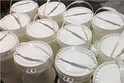
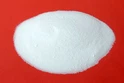
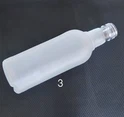
As a seasoned supplier of Glass Frosting Powder, I've witnessed firsthand the transformative power of this remarkable product in the glass industry. Glass frosting powder is a key ingredient in creating a variety of aesthetic and functional effects on glass surfaces, from the delicate milky finish of a perfume bottle to the sophisticated satin look of a high - end liquor container. In this blog, I'll delve into the ingredients that make up glass frosting powder, their roles, and how they contribute to the overall performance of the product.
The Core Ingredients of Glass Frosting Powder
Hydrofluoric Acid - Based Compounds
Hydrofluoric acid (HF) or its salts are the most common and effective ingredients in glass frosting powder. Hydrofluoric acid has a unique ability to react with the silica (SiO₂) in glass. The chemical reaction can be represented as follows:
SiO₂ + 6HF → H₂SiF₆+ 2H₂O
This reaction etches the glass surface, creating a rough texture that scatters light, resulting in the characteristic frosted appearance. However, hydrofluoric acid is extremely dangerous. It can cause severe burns and is toxic if inhaled or absorbed through the skin. Therefore, in commercial glass frosting powders, it is often used in the form of its salts, such as ammonium bifluoride (NH₄HF₂). Ammonium bifluoride dissociates in water to release fluoride ions, which react with the glass in a similar way to hydrofluoric acid.
Buffering Agents
Buffering agents are added to glass frosting powder to control the pH of the solution when the powder is mixed with water. Maintaining the appropriate pH is crucial for the efficiency and safety of the frosting process. For example, sodium dihydrogen phosphate (NaH₂PO₄) and disodium hydrogen phosphate (Na₂HPO₄) can be used as a buffer system. A stable pH ensures that the reaction between the fluoride ions and the glass occurs at an optimal rate. If the pH is too high, the reaction may be too slow, resulting in an uneven or incomplete frosting effect. On the other hand, if the pH is too low, the reaction can be too aggressive, leading to over - etching and potential damage to the glass.
Surfactants
Surfactants play an important role in glass frosting powder. They reduce the surface tension of the solution, allowing it to spread evenly over the glass surface. This ensures that the frosting effect is uniform across the entire glass piece. Common surfactants used in glass frosting powders include non - ionic surfactants like alkylphenol ethoxylates. These surfactants also help to prevent the formation of air bubbles during the application process, which could otherwise cause spots or uneven areas on the frosted glass.
Abrasive Particles
Some glass frosting powders contain fine abrasive particles, such as silicon carbide (SiC) or aluminum oxide (Al₂O₃). These particles physically scratch the glass surface while the chemical etching is taking place. The combination of chemical etching and physical abrasion can create a more pronounced and textured frosted effect. The size and concentration of the abrasive particles can be adjusted to achieve different levels of roughness and opacity on the glass.
Different Types of Glass Frosting Powders and Their Ingredients
Water Glass Frosting Powder
Water glass frosting powder is a type of glass frosting powder that is known for its relatively mild and controllable frosting effect. In addition to the basic ingredients mentioned above, water glass (sodium silicate, Na₂SiO₃) is a key component. Water glass acts as a binder and also helps to slow down the etching process. It forms a thin layer on the glass surface, which regulates the diffusion of the fluoride ions and other reactive species. This results in a more gradual and uniform frosting effect, making it suitable for applications where a delicate and precise finish is required, such as on glass art pieces or high - end glassware.


Applications and Their Impact on Ingredient Selection
How To Produce The Milky Surface On Glass Bottle
To produce a milky surface on a glass bottle, the formulation of the glass frosting powder needs to be carefully adjusted. A higher concentration of fluoride - based compounds may be used to achieve a more opaque and milky appearance. Additionally, the type and amount of surfactants can be optimized to ensure that the solution adheres well to the curved surface of the bottle and spreads evenly. The abrasive particles, if used, should be of a suitable size to create the right level of texture for the milky effect.
Glass Liquor Bottle With Satin Effect
For a glass liquor bottle with a satin effect, a more refined and smooth frosting is desired. The glass frosting powder for this application may contain lower concentrations of abrasive particles to avoid creating a too - rough surface. Instead, the emphasis is on using high - quality buffering agents and surfactants to achieve a consistent and elegant satin finish. The fluoride - based compounds are carefully selected and dosed to etch the glass just enough to create the soft, diffused look associated with a satin finish.
Quality Control and Safety Considerations
As a supplier of glass frosting powder, quality control is of utmost importance. We conduct rigorous testing on each batch of our products to ensure that the ingredients are in the correct proportions and that the powder meets the required standards. This includes testing the pH, solubility, and frosting performance of the powder.
Safety is also a top priority. We provide detailed safety instructions with our products, including information on proper handling, storage, and disposal. Our glass frosting powders are packaged in secure containers with clear labels indicating the potential hazards and safety precautions.
Conclusion
The ingredients of glass frosting powder are carefully selected and combined to achieve specific frosting effects on glass surfaces. From hydrofluoric acid - based compounds that etch the glass to buffering agents, surfactants, and abrasive particles that fine - tune the process, each ingredient plays a crucial role. Different types of glass frosting powders, such as water glass frosting powder, are formulated to meet the diverse needs of the glass industry. Whether you're looking to create a milky surface on a glass bottle or a satin effect on a liquor container, the right combination of ingredients is essential.
If you're in the market for high - quality glass frosting powder, I invite you to reach out to us. We have a wide range of products to suit your specific requirements. Our team of experts is ready to assist you in selecting the best glass frosting powder for your application and providing any technical support you may need. Contact us to start a procurement discussion and take your glass products to the next level.
References
- "Chemistry of Glass Etching" - Journal of Glass Science
- "Surfactants in Industrial Applications" - Industrial Chemistry Review
- "Safety Guidelines for Handling Hydrofluoric Acid and Its Salts" - Occupational Safety and Health Administration (OSHA)