Etching glass is a time - honored art and industrial process that has been used to create beautiful designs, enhance functionality, and add value to glass products. As a leading supplier of etching glass materials, I've witnessed firsthand the diverse effects that different etching materials can have on the glass surface. In this blog, I'll delve into the various types of etching glass materials and their impacts on glass.
1. Hydrofluoric Acid - Based Materials
Hydrofluoric acid (HF) is one of the most well - known and powerful etching agents for glass. It works by reacting with the silica (SiO₂) in the glass, which is the main component of most glasses. The chemical reaction can be represented as follows:
SiO₂ + 4HF → SiF₄ + 2H₂O
SiF₄ can further react with excess HF to form H₂SiF₆.
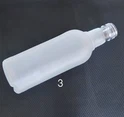
When using hydrofluoric acid - based materials, the glass surface undergoes a profound change. The acid penetrates the surface layer of the glass, dissolving the silica network. This results in a smooth, frosted appearance. The degree of frosting can be controlled by adjusting the concentration of the acid, the etching time, and the temperature. For example, a higher concentration of hydrofluoric acid will etch the glass more rapidly, creating a deeper and more opaque frost.
However, hydrofluoric acid is extremely dangerous. It can cause severe burns, and if absorbed into the body, it can lead to serious health problems, including damage to bones and internal organs. Therefore, strict safety precautions must be taken when handling hydrofluoric acid - based etching materials. You can learn more about the chemical etching process on our Glass Surface Chemical Etching page.
2. Ordinary Glass Etching Powder
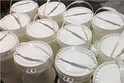
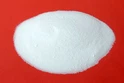
Ordinary glass etching powder is a popular alternative to hydrofluoric acid - based materials. These powders usually contain a mixture of chemicals such as ammonium bifluoride and other additives. Ammonium bifluoride (NH₄HF₂) also reacts with the silica in the glass to achieve etching. The reaction is similar to that of hydrofluoric acid but is generally milder.
When using ordinary glass etching powder, it is typically mixed with water to form a paste. The paste is then applied to the glass surface. The etching process is slower compared to hydrofluoric acid, but it is also safer. The resulting glass surface has a more uniform and fine - grained frosted appearance. It is suitable for creating decorative patterns on glass, such as those used in home decor items, glassware, and signage.
Our Ordinary Glass Etching Powder offers a cost - effective and user - friendly solution for both amateur and professional glass etchers. It allows for greater control over the etching process, as the powder can be easily adjusted in terms of the amount used and the application time.
3. Glass Etching Chemicals
There are also other types of glass etching chemicals available in the market. Some of these are designed for specific applications, such as precision etching in the electronics industry or high - end decorative work.
For instance, some organic - based etching chemicals can be used to create very fine and detailed patterns on glass. These chemicals work by selectively attacking certain components of the glass surface, leaving behind a precise design. They are often used in the production of micro - optical devices, where high precision is required.
On the other hand, some metal - salt - based etching chemicals can be used to create unique color effects on the glass surface. When these chemicals react with the glass, they can form metal oxides or other compounds that impart a specific color to the etched area. This is commonly used in the creation of artistic glass pieces.
You can explore our range of Glass Etching Chemical products to find the right solution for your specific needs.
4. Impact on Glass Properties
In addition to the visual effects, different etching materials can also have an impact on the physical and chemical properties of the glass.
Mechanical Properties
Etching can change the surface roughness of the glass, which in turn affects its mechanical strength. A rougher surface may have a higher coefficient of friction, which can be beneficial in some applications, such as anti - slip glass surfaces. However, excessive etching can also create micro - cracks on the glass surface, reducing its overall strength. For example, if the glass is etched too deeply with a strong acid, it may become more prone to breakage.
Chemical Resistance
The etching process can alter the chemical resistance of the glass. Some etching materials may remove the protective surface layer of the glass, making it more susceptible to chemical attack from other substances. On the other hand, certain etching treatments can also improve the chemical resistance by creating a more stable surface layer. For example, some metal - salt - based etching processes can form a protective metal oxide layer on the glass surface.
5. Considerations for Choosing Etching Materials
When choosing etching materials, several factors need to be considered.
Safety
As mentioned earlier, safety is a crucial factor. Hydrofluoric acid - based materials require strict safety measures, while ordinary glass etching powder and some other chemicals are generally safer to handle. If you are a beginner or working in a home environment, it is advisable to choose safer materials.
Desired Effect
The desired visual and functional effect on the glass surface is another important consideration. If you want a deep, opaque frost, hydrofluoric acid - based materials may be more suitable. For a fine - grained and uniform frost, ordinary glass etching powder is a good choice. If you need precision etching or color effects, specific glass etching chemicals should be selected.
Cost
Cost is also a factor. Hydrofluoric acid - based materials may be more cost - effective in large - scale industrial applications, but they come with high safety - related costs. Ordinary glass etching powder is relatively inexpensive and is suitable for small - scale projects.


6. Conclusion
In conclusion, different etching glass materials have a wide range of effects on the glass surface, from the visual appearance to the physical and chemical properties of the glass. As a supplier of etching glass materials, we understand the importance of providing high - quality products that meet the diverse needs of our customers. Whether you are an artist looking to create beautiful glass art, a manufacturer in the electronics industry requiring precision etching, or a DIY enthusiast working on a home project, we have the right etching materials for you.
If you are interested in our etching glass materials or have any questions about the etching process, please don't hesitate to contact us for a procurement discussion. We are committed to providing you with the best solutions and support.
References
- "The Chemistry of Glass Etching", Journal of Glass Science, Vol. XX, Issue XX, 20XX.
- "Safety Guidelines for Handling Glass Etching Chemicals", Industrial Safety Journal, Vol. XX, Issue XX, 20XX.
- "Advances in Glass Etching Technology", Proceedings of the International Glass Conference, 20XX.