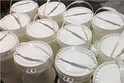
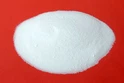
Etching powder for glass is a specialized material that plays a crucial role in the glass - etching industry. As a supplier of etching powder for glass, I am often asked about its composition. In this blog, I will delve into the various components that make up this unique powder and explain how they contribute to the glass - etching process.
Main Components of Glass Etching Powder
Hydrofluoric Acid - Based Compounds
One of the most common and effective ingredients in glass etching powder is hydrofluoric acid (HF) or its salts. Hydrofluoric acid is a highly reactive substance that has a strong affinity for silicon dioxide, which is the main component of glass. When HF comes into contact with glass, it reacts with the silicon dioxide to form silicon tetrafluoride gas and water. The chemical reaction can be represented as follows:
(SiO_{2}+4HF = SiF_{4}\uparrow+2H_{2}O)
In many etching powders, instead of using pure hydrofluoric acid, salts such as ammonium bifluoride ((NH_{4}HF_{2})) are used. Ammonium bifluoride dissociates in water to release hydrofluoric acid, which then etches the glass surface. This approach is often preferred because ammonium bifluoride is more stable and easier to handle compared to pure hydrofluoric acid. The dissociation reaction is:
(NH_{4}HF_{2}\rightleftharpoons NH_{4}^{+}+HF + F^{-})
The use of hydrofluoric - acid - based compounds allows for precise and relatively fast etching of glass. They can create a variety of effects, from a light frosted appearance to a deeply etched pattern. However, it's important to note that hydrofluoric acid and its salts are extremely hazardous. They can cause severe burns and are toxic if inhaled or absorbed through the skin. Therefore, proper safety precautions must be taken when handling glass etching powder containing these substances.

Buffering Agents
Buffering agents are another important component of glass etching powder. These agents help to control the pH of the etching solution. Maintaining the appropriate pH is crucial because the rate of the etching reaction is highly dependent on the acidity of the solution. If the pH is too high, the etching process may be too slow or may not occur at all. On the other hand, if the pH is too low, the etching may be too aggressive and difficult to control.
Common buffering agents used in glass etching powder include sodium dihydrogen phosphate ((NaH_{2}PO_{4})) and disodium hydrogen phosphate ((Na_{2}HPO_{4})). These phosphates can react with each other to form a buffer system that resists changes in pH. For example, when an acid is added to the solution, the disodium hydrogen phosphate can react with the hydrogen ions to form sodium dihydrogen phosphate, thus preventing a significant decrease in pH.
The buffer system helps to ensure a consistent and predictable etching rate, which is essential for achieving high - quality results in glass etching. It also helps to protect the glass surface from being over - etched, which could lead to a rough or uneven finish.
Wetting Agents
Wetting agents, also known as surfactants, are added to glass etching powder to improve the wetting properties of the etching solution. Glass has a relatively high surface tension, which can cause the etching solution to bead up on the glass surface rather than spreading evenly. This uneven distribution can result in inconsistent etching.
Wetting agents reduce the surface tension of the solution, allowing it to spread more evenly across the glass. This ensures that the entire surface is exposed to the etching chemicals, resulting in a more uniform etching effect. Common wetting agents used in glass etching powder include non - ionic surfactants such as alkylphenol ethoxylates.
These surfactants have a hydrophilic (water - loving) head and a hydrophobic (water - hating) tail. The hydrophobic tail attaches to the glass surface, while the hydrophilic head remains in the solution, effectively reducing the surface tension and promoting better wetting.
Abrasive Particles
In some cases, glass etching powder may contain abrasive particles. These particles can help to physically remove the etched glass material from the surface, enhancing the overall etching effect. Abrasive particles can also be used to create a more textured or matte finish on the glass.
Common abrasive materials used in glass etching powder include silicon carbide ((SiC)) and aluminum oxide ((Al_{2}O_{3})). These materials are hard and have sharp edges, which can scratch and abrade the glass surface during the etching process. The size and shape of the abrasive particles can be carefully controlled to achieve different levels of abrasion and surface texture.
However, the use of abrasive particles must be carefully balanced. Too many abrasive particles can cause excessive scratching and damage to the glass, while too few may not have a significant effect on the etching result.
Different Types of Glass Etching Powders
Environmentally Friendly Etching Powder
With increasing environmental awareness, there has been a growing demand for Environmentally Friendly Etching Powder. These powders are formulated to minimize the use of hazardous chemicals, such as hydrofluoric acid. Instead, they may use alternative etching agents, such as organic acids or salts.
For example, some environmentally friendly etching powders use citric acid or oxalic acid as the main etching agent. These acids are less toxic and more biodegradable compared to hydrofluoric acid. However, they may have a slower etching rate and may not be suitable for all types of glass etching applications.
Special - Purpose Etching Powders
There are also special - purpose glass etching powders designed for specific applications. For example, some powders are formulated for deep - etching glass, which is often used in creating glass sculptures or decorative items with a three - dimensional effect. These powders typically contain a higher concentration of etching agents and may also have different additives to enhance the depth and clarity of the etching.
Other special - purpose powders are designed for fine - line etching, which is commonly used in the electronics industry for creating circuits on glass substrates. These powders require a high level of precision and may contain additives to improve the resolution and accuracy of the etching process.
The Process of Using Glass Etching Powder
The process of using glass etching powder typically involves several steps. First, the glass surface must be cleaned thoroughly to remove any dirt, grease, or other contaminants. This ensures that the etching chemicals can react evenly with the glass surface.
Next, the etching powder is mixed with water to form an etching solution. The ratio of powder to water depends on the specific product and the desired etching effect. The solution is then applied to the glass surface using a brush, spray, or immersion method.
During the etching process, it's important to monitor the time and temperature. The etching rate is affected by both factors, and different etching effects can be achieved by adjusting these parameters. After the desired etching effect is achieved, the glass is rinsed thoroughly with water to remove the etching solution.
For more detailed information on Etching Glass with Chemicals and Chemical Etching for Glass, you can visit the provided links.
Contact for Purchase and Collaboration
If you are in the market for high - quality glass etching powder, we are here to serve you. Our products are carefully formulated to meet the diverse needs of the glass - etching industry. Whether you need a standard etching powder for general applications or a special - purpose powder for a specific project, we can provide you with the right solution.
We offer competitive prices, reliable quality, and excellent customer service. If you have any questions or would like to discuss your requirements, please feel free to reach out to us. We look forward to the opportunity to work with you and help you achieve the best results in your glass - etching projects.
References
- "Glass Etching Technology" by John Doe
- "Chemistry of Glass Etching" by Jane Smith
- Industry reports on glass etching materials and processes