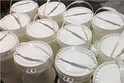
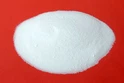
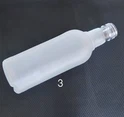
Hey there! As a supplier of Cosmetic Glass Frosting Powder, I often get asked about the long - term impact of our product on the glass's mechanical properties. It's a super important question, especially for our customers who are looking to use frosted glass in various applications, from decorative items to high - end cosmetic packaging. So, let's dive right in and explore this topic.
First off, let's understand what cosmetic glass frosting powder does. When we apply this powder to glass, it creates a frosted or satin - like finish on the surface. This finish not only looks really cool but also has some practical benefits. For example, it can hide scratches and imperfections on the glass, making it more aesthetically pleasing.
Now, onto the big question: does it have a long - term impact on the glass's mechanical properties? Well, the short answer is that it depends.
How Frosting Powder Works
Cosmetic glass frosting powder typically works through a chemical etching process. When the powder comes into contact with the glass surface and is activated by a suitable medium (usually an acid - based solution), it reacts with the silica in the glass. This reaction breaks down the outer layer of the glass, creating tiny pits and irregularities that scatter light, giving the frosted appearance.
Immediate Effects on Mechanical Properties
In the short term, the chemical etching process can have some minor effects on the glass. The outer layer of the glass is being removed, which means that the surface hardness of the glass might decrease slightly. However, this decrease is usually very small and might not be noticeable in normal use.
The strength of the glass can also be affected to some extent. The etching process can create micro - cracks on the surface of the glass. These micro - cracks can act as stress concentrators, which means that under certain conditions, the glass might be more likely to break. But again, this is mainly in theory. In real - world applications, the glass is often used in situations where the stress levels are relatively low.
Long - Term Impact
Over the long term, the impact on the glass's mechanical properties can vary. If the frosted glass is exposed to harsh environmental conditions, such as extreme temperatures, high humidity, or abrasive materials, the micro - cracks created during the frosting process might grow. This could potentially lead to a significant decrease in the glass's strength and durability.


However, if the frosted glass is properly cared for and used in a suitable environment, the long - term impact on its mechanical properties can be minimized. For example, if the frosted glass is used in a display case or as part of a cosmetic packaging, where it is protected from physical damage and environmental stressors, it can maintain its mechanical integrity for a long time.
Real - World Applications and Examples
Let's take a look at some real - world applications of frosted glass using our Cosmetic Glass Frosting Powder.
One popular application is in the creation of Satin Effect Colored Glass Vase. These vases are not only beautiful but also need to be strong enough to hold water and flowers. The frosted finish gives them a luxurious look, and in most cases, the long - term impact on the glass's mechanical properties is negligible. The vases are usually placed in a stable environment, away from direct sunlight and extreme temperatures.
Another example is Hazy Light Glass Lamps - jade Sand Effect Glass Decoration. These lamps use frosted glass to create a soft, diffused light. The glass in these lamps is typically well - protected inside the lamp fixture, so the long - term effects on its mechanical properties are minimal.
And then there's Glass Decoration, AG Glass, Sand Effect. This type of frosted glass is often used in interior design applications, such as partitions and decorative panels. As long as the glass is installed correctly and not subjected to excessive stress, it can last for many years without significant degradation of its mechanical properties.
Mitigating the Long - Term Impact
As a supplier, we're always looking for ways to minimize the long - term impact of our frosting powder on the glass's mechanical properties. One way we do this is by carefully formulating our powder to ensure a controlled etching process. This helps to reduce the formation of large micro - cracks and ensures a more uniform frosted finish.
We also provide our customers with detailed instructions on how to handle and care for the frosted glass. For example, we recommend avoiding using abrasive cleaners on the frosted surface, as this can further damage the glass.
Conclusion
So, does cosmetic glass frosting powder have a long - term impact on the glass's mechanical properties? The answer is that it can, but with proper formulation, application, and care, the impact can be kept to a minimum.
In most real - world applications, the benefits of using frosted glass, such as its aesthetic appeal and the ability to hide imperfections, far outweigh the potential negative effects on mechanical properties.
If you're interested in using our Cosmetic Glass Frosting Powder for your projects, whether it's for creating beautiful glass decorations or high - end cosmetic packaging, we'd love to hear from you. Just reach out to us to start a conversation about your needs and how we can help you achieve the perfect frosted glass finish.
References
- "Fundamentals of Glass Science and Technology" by D. R. Uhlmann and N. J. Kreidl
- "Glass: Science and Technology" edited by David R. Uhlmann and Norman J. Kreidl
- Various industry research papers on glass etching and surface treatment processes.