As a trusted supplier of Cosmetic Glass Frosting Powder, I'm often asked about its composition. In this blog, I'll delve into the components that make up this essential product, explaining their roles and how they contribute to the overall performance of the frosting powder.
Main Components of Cosmetic Glass Frosting Powder
Hydrofluoric Acid Compounds
Hydrofluoric acid (HF) or its salts are the most crucial components in glass frosting powder. Hydrofluoric acid has a unique ability to react with the silica (SiO₂) in glass. The chemical reaction is as follows: SiO₂ + 4HF → SiF₄↑+ 2H₂O This reaction etches the surface of the glass, creating a frosted appearance. In commercial frosting powders, instead of using pure hydrofluoric acid, its salts like sodium fluoride (NaF) or ammonium bifluoride (NH₄HF₂) are commonly used. These salts are safer to handle and store compared to pure hydrofluoric acid. Sodium fluoride reacts with the moisture in the air and the glass surface to form hydrofluoric acid in - situ, which then etches the glass. NH₄HF₂ can also release HF when heated or in the presence of an acid. The reaction of ammonium bifluoride with silica is similar to that of hydrofluoric acid, gradually removing the outer layer of the glass and creating a micro - rough surface that scatters light, resulting in the characteristic frosted look.
Buffering Agents
Buffering agents are added to control the pH of the frosting solution. They help maintain a stable chemical environment during the frosting process. For example, borates such as sodium borate (Na₂B₄O₇) are often used as buffering agents. By adjusting the pH, they can influence the rate of the etching reaction. A proper pH level ensures that the etching process is uniform and that the final frosted effect meets the desired quality standards. If the pH is too high or too low, the reaction may be too fast or too slow, leading to an uneven or ineffective frosting.
Wetting Agents
Wetting agents, also known as surfactants, are another important part of the frosting powder composition. They reduce the surface tension of the frosting solution, allowing it to spread evenly over the glass surface. This ensures that the etching reaction occurs uniformly across the entire area. Common wetting agents include non - ionic surfactants like polyethylene glycol ethers. These surfactants have hydrophilic and hydrophobic parts, which help the solution to adhere to the glass and penetrate into small pores or crevices on the glass surface, resulting in a more consistent frosted finish.
Abrasive Particles
Some cosmetic glass frosting powders may contain fine abrasive particles. These particles can enhance the mechanical abrasion during the frosting process. For example, silica sand with a very fine particle size can be added. When the frosting solution is applied and rubbed gently on the glass surface, the abrasive particles help to physically remove some of the glass material in addition to the chemical etching. This can create a more pronounced frosted effect, especially for achieving a coarser or more textured look.
Binding Agents
Binding agents are used to hold the various components of the frosting powder together. They ensure that the powder has a proper consistency and can be easily mixed with water or other solvents to form a workable paste or solution. Polyvinyl alcohol (PVA) is a commonly used binding agent. It can form a gel - like structure when mixed with water, which helps to keep the other components in suspension and prevents them from settling too quickly. This is important for the even application of the frosting solution on the glass surface.
How the Composition Affects the Frosting Effect
The proportion and type of each component in the cosmetic glass frosting powder can significantly affect the final frosting effect. For instance, if the concentration of hydrofluoric acid compounds is too high, the etching process may be too rapid, resulting in a rough and uneven surface. On the other hand, if the concentration is too low, the frosting may be too faint or incomplete.
The choice of buffering agents can also influence the appearance of the frosted glass. Different buffering agents may have different buffering capacities and pH ranges, which can affect the reaction rate and the quality of the etched surface. A well - chosen buffering agent can help achieve a smooth, uniform, and aesthetically pleasing frosted finish.
Wetting agents play a crucial role in determining the coverage and evenness of the frosting. If a wetting agent is not effective, the frosting solution may bead up on the glass surface, leading to uneven etching. By ensuring good wetting, the solution can spread evenly, resulting in a consistent frosted look across the entire glass piece.
The presence and type of abrasive particles can change the texture of the frosted glass. Fine abrasive particles can create a soft, satin - like finish, while coarser particles can produce a more rugged, textured appearance. This allows for customization of the frosting effect according to different design requirements.
Applications of Cosmetic Glass Frosting Powder
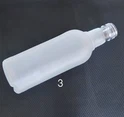
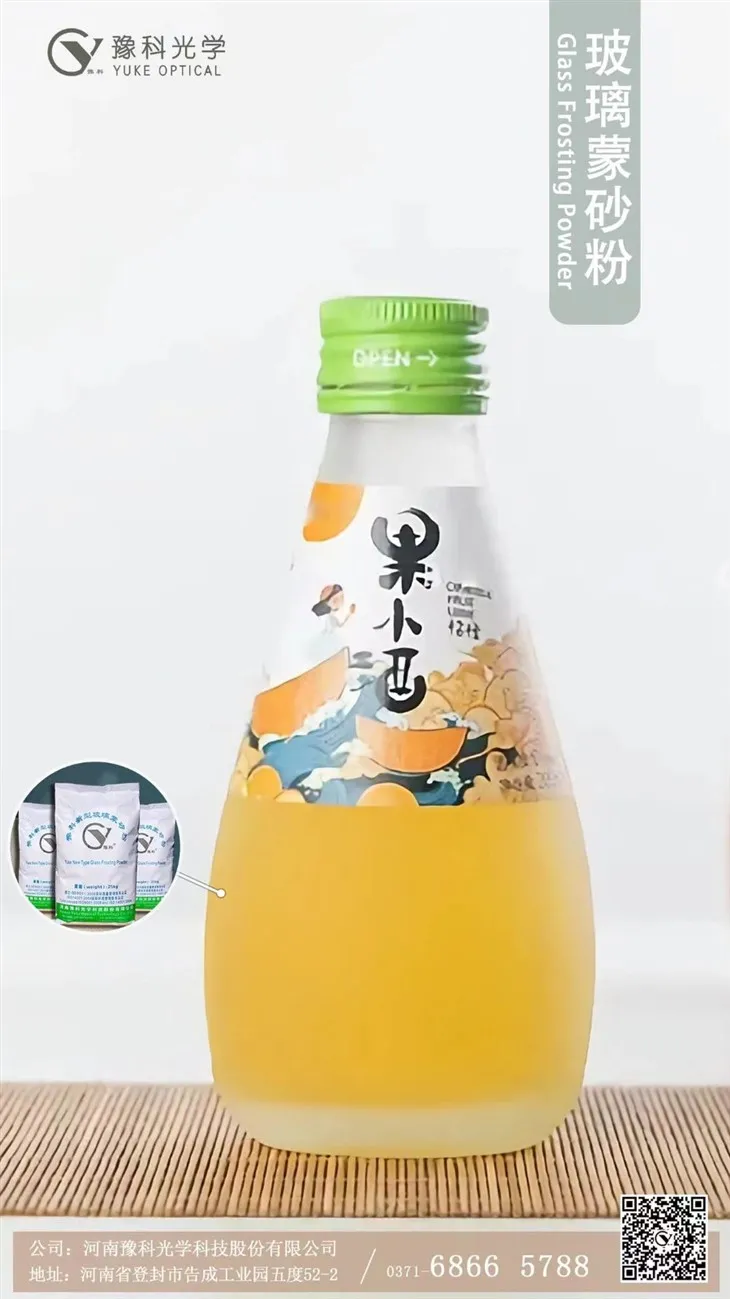
Cosmetic glass frosting powder has a wide range of applications. In the cosmetic industry, it is used to frost glass bottles and jars for products such as perfumes, lotions, and creams. The frosted glass gives these products a more luxurious and high - end look. It also provides some privacy by obscuring the contents of the container while still allowing a hazy view.

For more information on the permanent effect on glass, you can visit The Permanent Effect On Glass. If you are interested in hazy light glass lamps with a jade sand effect glass decoration, check out Hazy Light Glass Lamps - jade Sand Effect Glass Decoration. And for coating material for glass bottles and jars, refer to Coating Material For Glass Bottles And Jars.
In addition to the cosmetic industry, frosted glass is also used in interior decoration. Frosted glass panels can be used as partitions, doors, or windows to add a touch of elegance and privacy. It can also be used in the lighting industry to create diffused light sources. The frosted surface scatters light, reducing glare and creating a soft, warm lighting effect.

Why Choose Our Cosmetic Glass Frosting Powder
As a supplier, we take pride in offering high - quality cosmetic glass frosting powder. Our products are formulated with the right balance of components to ensure a consistent and high - quality frosting effect. We use only the purest and safest raw materials, and our manufacturing process is strictly controlled to meet international quality standards.
Our R & D team is constantly working on improving our products, exploring new formulations, and optimizing the composition to meet the changing needs of our customers. Whether you need a fine, smooth frosted finish or a more textured look, we can provide a customized solution for you.
Contact Us for Procurement
If you are interested in our Cosmetic Glass Frosting Powder, we encourage you to contact us for procurement. We offer competitive prices, reliable delivery, and excellent after - sales service. Our team of experts is ready to assist you with any questions you may have about our products and the frosting process. Start a conversation with us today and let's create the perfect frosted glass solution for your needs.

References
- Handbook of Glass Science and Technology.
- Journal of Glass Chemistry and Physics.
- Industrial Applications of Glass Frosting Techniques.