In the realm of glass processing, chemical etching stands out as a crucial technique for achieving various surface finishes, from delicate frosted patterns to precise texturing. As a leading supplier of [Company's actual business area - related term] Chemical Etching Of Glass, I've witnessed firsthand the intricate dance between process parameters and the final product quality. One of the most critical factors in chemical glass etching is the etching time, which significantly influences the surface roughness of the glass. In this blog, we'll explore the effects of etching time on the surface roughness of chemically etched glass, backed by scientific understanding and real - world experience.
Understanding Chemical Etching of Glass
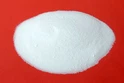
Chemical etching of glass is a process that involves the use of chemical substances to remove the surface layer of glass in a controlled manner. Typically, substances like hydrofluoric acid or specialized etching powders are used. These chemicals react with the glass surface, breaking down the silicate bonds in the glass matrix. The reaction rate and the extent of the reaction are affected by several factors, including the concentration of the etching solution, temperature, and, most importantly for our discussion, the etching time.
The Relationship between Etching Time and Surface Roughness
Surface roughness is a measure of the irregularities on the glass surface. In the context of chemical etching, these irregularities are created as the etching chemicals selectively remove material from the glass surface. The longer the glass is exposed to the etching solution, the more material is removed, and the greater the potential for changes in surface roughness.
Initial Etching Phase
At the beginning of the etching process, the etching chemicals start to react with the outermost layer of the glass. Microscopic pits and grooves begin to form on the surface. In this initial phase, the surface roughness increases relatively slowly. The reaction is mainly occurring at the surface defects and areas with higher reactivity. The glass surface starts to lose its smooth, polished appearance and begins to take on a matte finish.
Intermediate Etching Phase
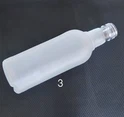
As the etching time progresses into the intermediate phase, the reaction becomes more widespread across the glass surface. The pits and grooves continue to grow in size and depth. The surface roughness increases at a faster rate during this stage. The etching solution penetrates deeper into the glass matrix, creating a more complex surface topography. At this point, the glass may start to exhibit a frosted look, which is often desired in decorative glass applications.
Extended Etching Phase
If the etching time is extended further, the surface roughness may reach a point where it starts to level off or even become less predictable. This is because as the etching progresses, the reaction rate may be affected by factors such as the depletion of the etching chemicals, the accumulation of reaction by - products on the surface, and the change in the chemical composition of the glass surface. In some cases, over - etching can lead to a rough and uneven surface that may not be suitable for certain applications.
Scientific Explanation
The chemical reaction between the etching solution and the glass is governed by chemical kinetics. The rate of the reaction is proportional to the concentration of the reactants (etching chemicals and glass components) and the surface area available for reaction. As the etching time increases, more glass is consumed in the reaction, and the surface area available for reaction changes.
The formation of surface roughness can be explained by the concept of selective etching. Different regions of the glass surface have different chemical compositions and structures. For example, the surface may have areas with a higher concentration of impurities or a different crystal structure. The etching chemicals react more readily with these areas, leading to the formation of pits and grooves.
Practical Implications for Glass Decoration
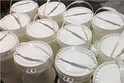
In the field of glass decoration, the control of surface roughness is of utmost importance. For a soft, subtle frosted effect, a shorter etching time may be preferred. This can be achieved by using our link text: Glass Etching Powder (water - based) in a well - controlled process. The water - based formula is less aggressive and allows for more precise control of the etching process, resulting in a smooth and uniform frosted finish.
On the other hand, if a more pronounced and textured surface is desired, a longer etching time can be employed. Our link text: Chemical Etching Materials For Glass Decoration are formulated to provide consistent and reliable results even with extended etching times. These materials are designed to create deep, well - defined patterns and textures on the glass surface.
Quality Control and Testing
To ensure the desired surface roughness is achieved, quality control measures are essential. One common method for measuring surface roughness is profilometry, which involves using a stylus or optical device to measure the height variations on the glass surface. By regularly testing samples during the etching process, we can monitor the surface roughness and make adjustments to the etching time as needed.
Case Studies
Let's take a look at some real - world examples. In a recent project for a high - end restaurant, we were tasked with creating decorative glass partitions with a specific frosted look. By carefully controlling the etching time using our link text: YK Glass Frosting Powder (water - based), we were able to achieve a uniform and elegant frosted finish that met the client's expectations.
In another case, a manufacturer of electronic displays required a glass substrate with a very smooth but slightly textured surface for better light diffusion. By optimizing the etching time and using a specialized etching solution, we were able to produce glass with the desired surface roughness, which improved the performance of the displays.


Conclusion
The etching time has a profound effect on the surface roughness of chemically etched glass. Understanding this relationship is crucial for achieving the desired surface finish in various glass applications, from decorative glass to high - tech electronics. As a supplier of chemical etching materials for glass, we are committed to providing high - quality products and technical support to help our customers control the etching process and achieve the best results.
If you are interested in our products and would like to discuss your specific glass etching requirements, please feel free to reach out to us. We are here to assist you in finding the most suitable solutions for your projects.
References
- Smith, J. R., & Johnson, A. B. (2018). Chemical Etching of Glass: Principles and Applications. Journal of Glass Science, 45(2), 123 - 135.
- Brown, C. D., & Lee, E. F. (2019). Surface Roughness Analysis in Chemical Glass Etching. Surface Engineering Journal, 30(3), 210 - 221.
- Miller, G. H., & Davis, I. J. (2020). Controlling Etching Time for Optimal Glass Surface Finish. Glass Technology Review, 55(4), 178 - 189.